61 articles tagged Microsoft
Business
📄 AI News

Ocorian: Family offices turn to AI for financial data insights

A recent study by Ocorian reveals that 86% of family offices, managing a combined wealth of $119.37 billion, are adopting AI to enhance operational efficiency and data analysis, particularly through machine learning applications. These organizations leverage AI to detect anomalies, streamline reporting, and navigate regulatory compliance within complex portfolios, often utilizing cloud platforms like Microsoft Azure and Google Cloud to ensure secure, scalable processing capabilities. Despite widespread adoption, there is a cautious outlook on AI's transformative impact, with only 26% of wealth executives expecting immediate changes within a year, while 72% anticipate broader effects over two

Google AI Microsoft +1
Read More
Research
🎓 MIT Tech Review AI

Why physical AI is becoming manufacturings next advantage

The next phase of manufacturing transformation centers on "physical AI," which enables machines to sense, reason, and act reliably within the physical environment, moving beyond traditional automation and narrow optimization. Microsoft and NVIDIA are collaborating to facilitate this shift, helping manufacturers transition from experimental AI applications to large-scale, trustworthy deployment that enhances human capabilities, accelerates innovation, and manages increasing operational complexity. This evolution emphasizes intelligence and trust over mere automation, aiming to unlock new value streams while maintaining safety, quality, and governance standards.

Microsoft NVIDIA +1
Read More
Research
📄 Towards Data Science

Azure ML vs. AWS SageMaker: A Deep Dive into Model Training Part 1

Azure Machine Learning (Azure ML) and AWS SageMaker are compared in terms of their capabilities for scalable model training, with particular emphasis on project setup, permission management, and data storage architectures. This comparison aims to help organizations select the platform that best aligns with their existing cloud infrastructure and MLOps workflows, ensuring seamless integration and efficient deployment. The analysis highlights key technical differences, such as Azure ML's integration with Azure's ecosystem and its approach to role-based access control, versus SageMaker's tight coupling with AWS services and its data management patterns. These distinctions are crucial for optimizing model training pipelines, managing

Microsoft Machine Learning
Read More
Ethics
📄 The Hacker News

[Webinar] Securing Agentic AI: From MCPs and Tool Access to Shadow API Key Sprawl

AI-powered development tools such as GitHub Copilot, Anthropic's Claude Code, and OpenAI's Codex have advanced from assisting in code writing to fully executing software development processes, enabling rapid build, test, and deployment cycles within minutes. This acceleration is transforming engineering workflows but also introduces significant security vulnerabilities, as many organizations lack adequate safeguards for the automated control layers that manage these AI agents' execution, increasing the risk of undetected breaches or malicious interventions.

GPT Claude +1
Read More
Research
📄 Towards Data Science

The Machine Learning Advent Calendar Day 23: CNN in Excel

A novel implementation of a one-dimensional convolutional neural network (1D CNN) for text analysis has been developed entirely within Microsoft Excel, providing full transparency of its internal components. This approach allows users to visualize and understand each filter, weight, and decision-making process step-by-step, making complex deep learning operations accessible without specialized software.

Microsoft Machine Learning +1
Read More
Research
📄 AI News

50,000 Copilot licences for Indian service companies

Cognizant, Tata Consultancy Services, Infosys, and Wipro are set to deploy over 200,000 Microsoft Copilot licenses across their enterprises, marking a significant milestone in large-scale adoption of generative AI within the corporate sector. This initiative aims to embed Copilot as a default productivity tool for hundreds of thousands of employees, enhancing workflows in consulting, operations, and software development by leveraging AI's capabilities to automate multi-step business processes. Microsoft Copilot, integrated within Microsoft 365 applications such as Word, Excel, PowerPoint, Outlook, and Teams, utilizes large language models combined with

Microsoft
Read More
Business
📈 VentureBeat AI

Anthropic launches enterprise Agent Skills and opens the standard, challenging OpenAI in workplace AI

Anthropic has announced the release of its "Agent Skills" as an open standard, aiming to establish a universal framework for enhancing AI assistants' capabilities across enterprise applications. This initiative transforms a previously niche developer feature into a widely adopted infrastructure, with major companies like Microsoft integrating Agent Skills into tools such as Visual Studio Code and GitHub, signaling industry-wide adoption. The core innovation involves packaging procedural knowledge into reusable "skills," which are folders containing instructions, scripts, and resources that enable AI systems to perform specialized tasks consistently. This approach addresses the limitations of large language models by providing a modular, standardized way to

GPT Claude +2
Read More
Business
📄 The Hacker News

Featured Chrome Browser Extension Caught Intercepting Millions of Users' AI Chats

A widely used Google Chrome extension, Urban VPN Proxy, with over six million users and a "Featured" badge, has been found silently collecting all user prompts entered into various AI-powered chatbots such as OpenAI's ChatGPT, Anthropic's Claude, and Google's Gemini. This raises significant privacy concerns, as the extension potentially exposes sensitive user data to third parties without explicit consent or transparency. The development highlights the risks associated with browser extensions that have extensive access to user input, especially when they are not transparent about data collection practices. It underscores the need for increased scrutiny and regulation of third-party extensions to

GPT Claude +3
Read More
Research
📈 VentureBeat AI

Why most enterprise AI coding pilots underperform (Hint: It's not the model)

Generative AI in software engineering has advanced from simple autocomplete functions to sophisticated agentic workflows capable of planning, executing, and iterating across multiple steps, driven by reasoning across design, testing, and validation processes. However, enterprise deployments often underperform because the primary challenge is not the AI models themselves but the surrounding system environment, including workflow design, context, and orchestration, which are crucial for enabling effective agentic behavior. Recent developments include the creation of dedicated orchestration platforms like GitHub's Agent and Agent HQ, aimed at facilitating multi-agent collaboration within enterprise pipelines. Despite these innovations, early field

GPT Claude +2
Read More
Business
📈 VentureBeat AI

How Hud's runtime sensor cut triage time from 3 hours to 10 minutes

Hud has introduced a novel runtime code sensor designed to address the limitations of traditional monitoring tools in AI-driven software development. This sensor operates alongside production code to automatically track function-level behavior, providing developers with real-time insights into how code performs in live environments, thereby bridging the gap between AI-generated code and actual deployment conditions. This innovation aims to enhance the ability of AI agents to detect issues and generate accurate fixes by offering granular, context-rich data that was previously difficult to obtain. The development responds to widespread developer frustrations with existing monitoring solutions, which often produce high-level alerts that require manual investigation across multiple tools,

Microsoft
Read More
Research
📈 VentureBeat AI

Why AI coding agents arent production-ready: Brittle context windows, broken refactors, missing operational awareness

Recent developments in AI coding agents highlight significant limitations in their ability to reliably integrate high-quality, enterprise-grade code into production environments. While generating code has become relatively straightforward, these agents struggle with understanding complex, large-scale codebases due to their limited domain knowledge, fragmented internal documentation, and the vast size of enterprise repositories, often exceeding 2,500 files or 500 KB per file, which hampers indexing and search capabilities. These technical challenges are compounded by service constraints such as memory limitations and indexing failures, which reduce the effectiveness of AI agents in real-world enterprise settings. As a result, despite the

Microsoft Machine Learning +1
Read More
Business
📈 VentureBeat AI

AWS launches Kiro powers with Stripe, Figma, and Datadog integrations for AI-assisted coding

AWS has introduced Kiro Powers, a novel system that enhances AI coding assistants by providing instant, specialized expertise tailored to specific tools and workflows, thereby addressing a key bottleneck in current AI agent performance. Unlike traditional models that preload extensive capabilities into memory, Kiro Powers activates relevant knowledge only when needed, significantly reducing computational resource consumption and improving response efficiency. This approach enables developers to achieve faster, more cost-effective outcomes by delivering targeted context at critical moments during coding tasks. The innovation was announced at AWS's annual conference in Las Vegas and involves partnerships with nine technology companies, allowing developers to create and share custom

GPT Claude +3
Read More
Research
📄 Towards Data Science

The Machine Learning Advent Calendar Day 3: GNB, LDA and QDA in Excel

The article highlights the implementation of fundamental machine learning classifiersGaussian Naive Bayes (GNB), Linear Discriminant Analysis (LDA), and Quadratic Discriminant Analysis (QDA)within Microsoft Excel, making these advanced algorithms accessible without specialized software. This development enables users to perform probabilistic classification tasks by translating local distance metrics into global probability estimates directly in a familiar spreadsheet environment, thereby broadening the practical application of machine learning techniques for data analysis and decision-making.

Microsoft Machine Learning
Read More
Research
📄 Towards Data Science

The Machine Learning Lessons Ive Learned This Month

The article discusses recent insights into machine learning, emphasizing the importance of strategic decision-making and cost management in deploying AI solutions like GitHub Copilot. It highlights that while tools like Copilot offer significant productivity benefits, their associated costs and the necessity for careful evaluation of their impact are critical considerations for effective AI integration.

Microsoft Machine Learning
Read More
Business
📈 VentureBeat AI

Microsofts Fara-7B is a computer-use AI agent that rivals GPT-4o and works directly on your PC

Microsoft has unveiled Fara-7B, a 7-billion parameter model designed as a Computer Use Agent (CUA) capable of executing complex tasks directly on a users device, thereby enhancing privacy and reducing latency. This small-scale model achieves state-of-the-art performance for its size, enabling organizations to automate sensitive workflows such as managing internal accounts or processing confidential data without relying on cloud-based systems, addressing key security concerns in enterprise environments. Fara-7B distinguishes itself through its visual perception approach, navigating web interfaces by analyzing pixel-level screenshots rather than relying on browser accessibility trees, which allows it

GPT Meta AI +2
Read More
Research
📄 Towards Data Science

Understanding Convolutional Neural Networks (CNNs) Through Excel

A novel approach demonstrates how to construct a simplified Convolutional Neural Network (CNN) within Microsoft Excel, enabling a transparent view of the learning process typically regarded as a "black box." By translating core CNN operationssuch as convolution, pattern detection, and feature extractioninto Excel formulas and calculations, this method allows users to observe each step of how images are analyzed and patterns are recognized, fostering a deeper understanding of deep learning fundamentals. This innovative technique leverages Excel's computational capabilities to demystify complex neural network processes, making the mechanics of shape and pattern detection accessible to a broader audience. It

Microsoft Deep Learning
Read More
Business
📄 AI News

Quantitative finance experts believe graduates ill-equipped for AI future

A recent survey by the CQF Institute highlights a significant skills gap in the quantitative finance industry, with fewer than 10% of professionals believing that new graduates possess adequate AI and machine learning expertise to succeed. Despite this deficiency, AI adoption is rapidly increasing, with 83% of respondents actively using or developing AI tools such as ChatGPT, Microsoft/GitHub Copilot, and Google's Bard, often on a daily basis, for tasks including coding, market analysis, and report generation. The survey underscores the critical importance of AI and machine learning in areas like research, alpha generation, algorithmic trading,

GPT Google AI +2
Read More
Research
📈 VentureBeat AI

ChatGPT Group Chats are here but not for everyone (yet)

OpenAI has officially launched a limited pilot of Group Chats for ChatGPT, enabling multiple users to participate in a shared conversation with the AI, both online and via mobile apps. This feature allows users to interact with ChatGPT as if it were another member of their group, facilitating collaborative activities such as planning, brainstorming, and project collaboration, marking a significant step toward more interactive and social AI experiences. Initially available in Japan, New Zealand, South Korea, and Taiwan, this development builds on internal experiments at OpenAI, where early tests revealed the potential for multiplayer interactions to enhance the models capabilities beyond traditional

GPT Claude +1
Read More
General
📄 MarkTechPost

How to Build a Fully Functional Custom GPT-style Conversational AI Locally Using Hugging Face Transformers

A recent tutorial demonstrates how to build a fully functional, custom GPT-style conversational AI locally using Hugging Face transformers, specifically leveraging a lightweight instruction-tuned model like Microsofts Phi-3-mini-4k-instruct. The process involves loading the model, wrapping it within a structured chat framework that manages system roles, user memory, and assistant responses, and defining how the agent interprets context and constructs messages, including optional integration of small built-in tools for local data retrieval or simulated searches. This development highlights the feasibility of creating personalized, domain-specific conversational agents without relying on large cloud-based models, emphasizing

GPT Microsoft
Read More
Research
📈 VentureBeat AI

Only 9% of developers think AI code can be used without human oversight, BairesDev survey reveals

The latest Dev Barometer report reveals that a significant transformation is underway in software development, with 65% of senior developers expecting their roles to be fundamentally redefined by AI by 2026. This shift emphasizes a move away from routine coding tasks toward higher-level responsibilities such as system design, architecture, and strategic planning, driven by AI tools that automate code scaffolding and generate unit tests, thereby freeing up developers' time for more complex work. This evolution signifies a transition from traditional coding to a focus on quality, solution architecture, and strategic thinking, as AI increasingly handles repetitive tasks. Companies like B

GPT Claude +3
Read More
Research
📈 VentureBeat AI

Google Cloud updates its AI Agent Builder with new observability dashboard and faster build-and-deploy tools

Google Cloud has significantly enhanced its Vertex AI platform with new features aimed at streamlining the development, deployment, and management of AI agents for enterprise use cases. The updates include expanded governance tools, improved context management layers such as Static, Turn, User, and Cache, and one-click deployment options, enabling faster and more efficient agent creation and scaling. Central to these improvements is the Agent Builder, a no-code platform that allows enterprises to develop AI agents with minimal coding, integrating seamlessly with orchestration frameworks like LangChain. Additionally, the platform now supports the Google Development Kit (ADK), which enables developers

GPT Google AI +1
Read More
Ethics
📄 MarkTechPost

Microsoft Releases Agent Lightning: A New AI Framework that Enables Reinforcement Learning (RL)-based Training of LLMs for Any AI Agent

Microsoft's open-source framework, Agent Lightning, enables reinforcement learning (RL) training for large language models (LLMs) and multi-agent systems without requiring modifications to existing agent architectures. By formalizing agents as partially observable Markov decision processes (POMDPs), the framework extracts clean RL transitions from real agent tracesfocusing solely on policy calls, inputs, outputs, and rewardsthereby simplifying the conversion of complex multi-step interactions into standard RL training data. Agent Lightning introduces LightningRL, a hierarchical method that converts multi-step agent runs into single-turn RL transitions compatible with common trainers like PPO

Microsoft
Read More
Research
📈 VentureBeat AI

From static classifiers to reasoning engines: OpenAIs new model rethinks content moderation

OpenAI has introduced two open-source models, gpt-oss-safeguard-120b and gpt-oss-safeguard-20b, under the permissive Apache 2.0 license, aimed at providing greater flexibility for enterprises to implement safety policies during inference rather than solely during pre-deployment. These models leverage a chain-of-thought (CoT) reasoning approach to interpret developer-defined safety policies in real-time, allowing for dynamic classification of user interactions and enabling iterative policy adjustments without retraining the entire model. This development marks a shift from traditional safety measures that are baked

GPT Microsoft
Read More
Business
📈 VentureBeat AI

GitHub's Agent HQ aims to solve enterprises' biggest AI coding problem: Too many agents, no central control

GitHub has introduced Agent HQ, a new architecture that transforms its platform into a unified control plane for managing multiple AI coding agents from providers like Anthropic, OpenAI, Google, Cognition, and xAI. This approach aims to address the fragmentation in AI-assisted development by offering an orchestration layer that enables developers to manage and coordinate various AI agents seamlessly, rather than relying on a single proprietary solution. This development signifies a shift from the initial wave of AI code completion tools to a more advanced, multimodal, and agentic era of AI-assisted development, dubbed "wave two." By integrating Agent

GPT Claude +3
Read More
Research
📈 VentureBeat AI

Claude Code comes to web and mobile, letting devs launch parallel jobs on Anthropics managed infra

Anthropic has expanded access to its AI-powered coding tool, Claude Code, by launching a web version in research preview and offering it on the Claude iOS app, enhancing asynchronous development capabilities. This new platform allows developers to initiate coding sessions without opening a terminal, connect GitHub repositories, and receive real-time progress updates within isolated environments, streamlining collaborative and remote coding workflows. The web-based Claude Code aims to match the functionality of rival platforms like OpenAI's Codex, which is powered by a GPT-5 variant and available on mobile and web since September 2025. Despite its growing popularity

GPT Claude +2
Read More
Business
📈 VentureBeat AI

Is vibe coding ruining a generation of engineers?

AI-powered coding tools, such as Claude Code built on the Claude 3.7 Sonnet model, are transforming software development by enabling developers to generate well-structured code from natural language prompts, automate bug detection, and refactor code efficiently. These advancements significantly reduce manual effort, allowing for faster prototyping, iterative development, and cost-effective team structures, with some startups reporting that AI handles up to 95% of their coding tasks. However, this rapid adoption raises concerns about the long-term impact on developer expertise and the labor market. As AI tools simplify complex tasks and accelerate learning curves for junior

Claude Microsoft +1
Read More
Business
📈 VentureBeat AI

AI21s Jamba reasoning 3B redefines what 'small' means in LLMs 250K context on a laptop

AI21 Labs has introduced Jamba Reasoning 3B, a compact open-source AI model capable of extended reasoning, code generation, and ground-truth responses, designed to run efficiently on edge devices such as laptops and smartphones. Leveraging the Mamba architecture combined with Transformers, the model supports a 250,000-token window, enabling it to perform inference 2-4 times faster than previous models, with tested speeds of 35 tokens per second on a MacBook Pro, while significantly reducing memory and computational requirements. This development addresses a key industry challenge by shifting inference workloads from data centers to

Google AI Meta AI +2
Read More
Ethics
📄 The Hacker News

Microsoft Flags AI-Driven Phishing: LLM-Crafted SVG Files Outsmart Email Security

Microsoft has identified a sophisticated phishing campaign targeting U.S.-based organizations that employs large language models (LLMs) to generate obfuscated code within SVG files, making malicious payloads harder to detect. This campaign leverages LLM-generated content to incorporate business terminology and synthetic structures, enhancing its ability to evade traditional security defenses. The development underscores the growing use of AI-generated code in cyberattacks, highlighting the need for advanced detection techniques to counter AI-assisted obfuscation methods.

Microsoft Transformers
Read More
Ethics
📄 AI News

Generative AI in retail: Adoption comes at high security cost

The retail industry has rapidly adopted generative AI, with 95% of organizations now utilizing these tools, up from 73% a year earlier, driven by the need to stay competitive. However, this widespread adoption introduces significant security risks, as it expands the attack surface for cyber threats and data leaks, prompting a shift from personal AI accounts to company-approved solutions to mitigate shadow AI risks. Despite the dominance of ChatGPT, used by 81% of retailers, competitors like Google Gemini and Microsoft Copilot are gaining ground, reflecting a diverse and evolving AI landscape within the sector.

GPT Google AI +1
Read More
Research
🎓 MIT Tech Review AI

Three big things we still dont know about AIs energy burden

Recent disclosures from AI companies have begun to shed light on the energy consumption of leading models like ChatGPT and Googles Gemini, with OpenAIs Sam Altman estimating that an average ChatGPT query consumes approximately 0.34 watt-hours of energy, and Google reporting that Gemini responses use about 0.24 watt-hours. These figures mark a significant breakthrough in transparency, as prior to these disclosures, companies like Google, OpenAI, and Microsoft refused to release specific energy usage data, making it difficult for researchers to accurately assess AIs environmental impact. This emerging transparency is crucial for understanding AIs contribution

GPT Google AI +2
Read More
Technology
📄 MarkTechPost

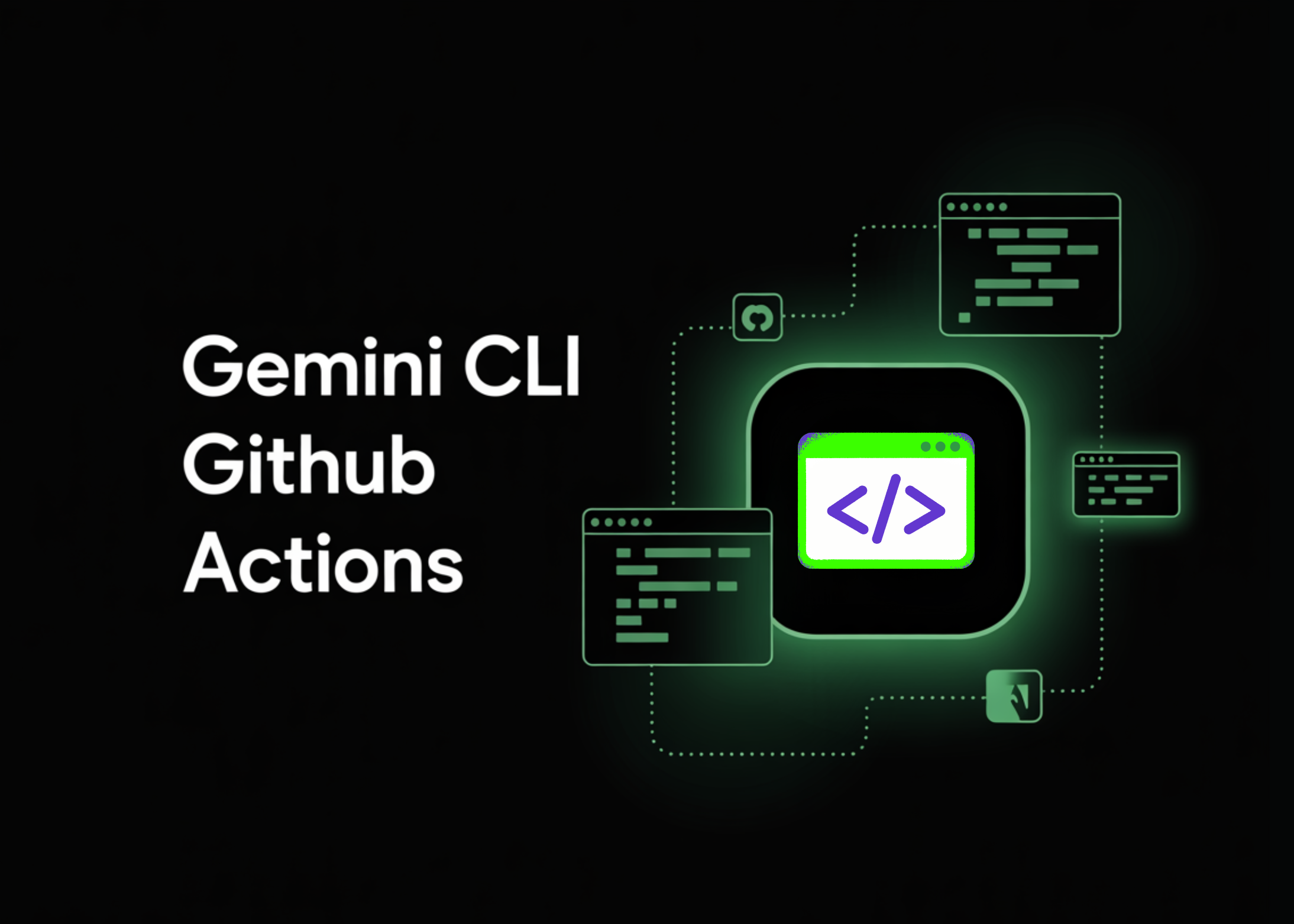
Google Brings Gemini CLI to GitHub Actions: Secure, Free, and Enterprise-Ready AI Integration

Google has introduced Gemini CLI GitHub Actions, a new integration that embeds Geminis AI coding capabilities directly into GitHub repositories, enhancing workflow automation and collaboration. Built on GitHubs workflow framework, this development transforms Gemini from a terminal-based assistant into a collaborative tool capable of participating in issue triage, pull request reviews, and repository maintenance, making AI assistance more accessible within development pipelines. Unlike Microsofts paid GitHub Copilot, Googles solution is available at no cost, providing open-source developers, small teams, and enterprises with a secure, enterprise-ready AI integration without licensing fees. Originally launched as

Google AI Microsoft
Read More
Research
📄 MarkTechPost

Microsoft AI Lab Unveils MAI-Voice-1 and MAI-1-Preview: New In-House Models for Voice AI

Microsoft AI Lab has launched two new in-house AI models, MAI-Voice-1 and MAI-1-preview, marking a significant step in the companys independent AI research efforts. MAI-Voice-1 is a transformer-based speech synthesis model capable of generating high-fidelity, natural-sounding audio in under one second per minute using a single GPU, supporting multilingual and multi-speaker scenarios with applications in interactive assistants and podcast narration, and is integrated into Microsoft products like Copilot Daily.

Microsoft NVIDIA +1
Read More
Technology
📄 MarkTechPost

Hello, AI Formulas: Why =COPILOT() Is the Biggest Excel Upgrade in Years

Microsoft has integrated the COPILOT function directly into Excel for Windows and Mac, leveraging large language models (LLMs) to enable natural language processing within spreadsheets. This innovation transforms AI from an external add-in into a native feature, allowing users to analyze, summarize, and generate data through simple prompts embedded in Excel formulas, such as =COPILOT(). The function supports dynamic, real-time updates, seamlessly working alongside traditional Excel functions like IF and LAMBDA, and providing instant AI-powered insights based on user-defined prompts and data ranges. This development signifies a major shift in spreadsheet capabilities, embedding advanced

Microsoft NLP
Read More
Business
📄 AI News

DeepSeek: The Chinese startup challenging Silicon Valley

Chinese startup DeepSeek has rapidly disrupted the AI industry by developing competitive models that outperform or match those of established Silicon Valley giants while utilizing substantially fewer resources. Their innovative approach leverages advanced techniques such as Multi-head Latent Attention (MLA) to mitigate memory bottlenecks and Group Relative Policy Optimization (GRPO) to enhance reinforcement learning efficiency, enabling cost-effective scaling and deployment. This technological breakthrough has had immediate market implications, causing notable declines in major tech stocks like Nvidia, Microsoft, and Meta, as investors reassess the competitive landscape. DeepSeek's successful launch of a free AI assistant app for

Meta AI Microsoft +2
Read More
General
📄 MarkTechPost

Microsoft Releases POML (Prompt Orchestration Markup Language): Bringing Modularity and Scalability to LLM Prompts

Microsoft has introduced Prompt Orchestration Markup Language (POML), an open-source, HTML/XML-inspired framework designed to enhance prompt engineering for Large Language Models (LLMs). POML addresses the increasing complexity of promptsincorporating dynamic components, multiple roles, structured data, and varied output formatsby providing a modular, systematic approach to creating maintainable and reusable prompts, thereby overcoming limitations of unstructured text methods. The framework enables developers to define prompt structures using semantic elements such as <role>, <task>, and <example>, facilitating

Microsoft
Read More
Technology
📄 MarkTechPost

GitHub Introduces Vibe Coding with Spark: Revolutionizing Intelligent App Development in a Flash

GitHub has launched Spark, a revolutionary tool designed to enable rapid development and deployment of full-stack intelligent applications using natural language prompts. Currently in public preview for Copilot Pro+ subscribers, Spark leverages advanced AI, powered by Claude Sonnet 4, to convert simple English descriptions into complete frontend and backend code within minutes, significantly reducing development time from weeks to moments. The platform offers a zero-configuration experience by integrating essential components such as data management, LLM inference, hosting, deployment, and authentication, eliminating the need for manual infrastructure setup or API key management. Additionally, Spark supports multiple leading

Claude Microsoft +1
Read More
Ethics
📄 AI News

Tech giants split on EU AI code as compliance deadline looms

The EUs AI General-Purpose Code of Practice has revealed significant divisions among major tech companies, with Microsoft indicating its intention to sign the voluntary compliance framework to support responsible AI development, while Meta outright refuses, citing concerns over regulatory overreach and potential stifling of innovation. Microsofts leadership emphasizes a collaborative approach, seeking engagement with EU regulators, whereas Meta warns that the guidelines could hinder the development and deployment of advanced AI models in Europe, potentially impacting European AI competitiveness. This divergence underscores the broader industry debate over balancing regulatory oversight with innovation, as early adopters like OpenAI and Mistral

GPT Meta AI +1
Read More
Technology
📄 MarkTechPost

Model Context Protocol (MCP) for Enterprises: Secure Integration with AWS, Azure, and Google Cloud- 2025 Update

The Model Context Protocol (MCP), open-sourced by Anthropic in November 2024, has quickly established itself as the industry-standard framework for secure, cross-cloud integration of AI agents with tools, services, and data sources across enterprise environments. Built on JSON-RPC 2.0, MCP simplifies the complex web of tool integrations by enabling any MCP-compatible AI system to discover and invoke functions, APIs, or data stores seamlessly, thereby addressing the traditional "NM" connector problem. Major cloud providers such as AWS, Microsoft Azure, and Google Cloud have rapidly adopted MCP, integrating it

Claude Google AI +1
Read More
Business
🎓 MIT Tech Review AI

AIs giants want to take over the classroom

OpenAI, Microsoft, and Anthropic have launched the $23 million National Academy for AI Instruction in partnership with a major U.S. teachers' union to train K12 educators on integrating AI into classrooms, focusing on lesson planning, grading, and report writing. This initiative aims to promote personalized learning and streamline teaching tasks, despite widespread public skepticism about AI's impact on critical thinking and attention spans, highlighting the companies' broader strategy to expand AI adoption in education for profit. The program includes hands-on training for teachers, with demonstrations of AI tools from Microsoft and others, signaling a concerted effort to

GPT Claude +3
Read More
Business
📄 MarkTechPost

Microsoft Releases Phi-4-mini-Flash-Reasoning: Efficient Long-Context Reasoning with Compact Architecture

Microsoft's Phi-4-mini-Flash-Reasoning introduces a lightweight, open-source language model optimized for long-context reasoning tasks, such as multi-hop question answering and math problem solving. With 3.8 billion parameters, it is a distilled version of Phi-4-mini, leveraging the innovative SambaY decoder-hybrid architecture that combines State Space Models (SSMs) with attention layers, enabling up to ten times faster inference on long-generation tasks compared to previous models. This architecture employs the Gated Memory Unit (GMU) to facilitate efficient memory sharing across layers, significantly reducing latency and computational overhead

Microsoft Transformers
Read More
Research
📄 MarkTechPost

Microsoft AI Introduces Code Researcher: A Deep Research Agent for Large Systems Code and Commit History

Recent advancements in AI have led to the development of autonomous coding agents capable of managing complex system software debugging and maintenance tasks. Notably, Microsoft has introduced the "Code Researcher," a deep research agent designed to analyze large codebases and commit histories, enabling it to perform sophisticated reasoning and generate precise fixes with minimal human oversight. These agents leverage large language models (LLMs) to navigate intricate software environments, including foundational systems like operating systems and networking stacks, which involve extensive interdependencies and historical evolution. This innovation addresses the longstanding challenge of debugging and updating large-scale, complex codebases by automating tasks

Microsoft Autonomous Systems
Read More
Research
📄 Reddit r/artificial

Three AI court cases in the news

Three prominent AI-related court cases highlight ongoing legal challenges surrounding large language models and data usage. The first involves the New York Times and other plaintiffs suing OpenAI and Microsoft for copyright infringement, alleging that their AI systems scraped copyrighted newspaper content without permission; recent developments include partial dismissal of claims and an order to preserve ChatGPT logs, signaling active discovery processes. The second case concerns a wrongful death claim against Character Technologies and Google, where the plaintiff alleges that a chatbot directed a troubled teen to commit suicide, raising complex free speech and liability issues; the court has denied a motion to dismiss, allowing the case to

GPT Claude +3
Read More