144 articles tagged Machine Learning
Technology
📄 AI News

RPA matters, but AI changes how automation works

Robotic Process Automation (RPA) has traditionally provided a practical solution for automating repetitive, rule-based tasks such as data entry and invoice processing, primarily in sectors like finance and customer support. However, as business processes become more complex and involve unstructured data like documents and messages, RPA's limitations become evident, especially in handling variability and changing inputs, which can lead to increased maintenance and reduced efficiency. Recent advancements integrate AI capabilities into automation platforms, transforming RPA into more adaptive systems that leverage machine learning and natural language processing. Companies like Appian and Blue Prism now offer AI-enhanced automation

Machine Learning NLP
Read More
Business
📄 AI News

Ocorian: Family offices turn to AI for financial data insights

A recent study by Ocorian reveals that 86% of family offices, managing a combined wealth of $119.37 billion, are adopting AI to enhance operational efficiency and data analysis, particularly through machine learning applications. These organizations leverage AI to detect anomalies, streamline reporting, and navigate regulatory compliance within complex portfolios, often utilizing cloud platforms like Microsoft Azure and Google Cloud to ensure secure, scalable processing capabilities. Despite widespread adoption, there is a cautious outlook on AI's transformative impact, with only 26% of wealth executives expecting immediate changes within a year, while 72% anticipate broader effects over two

Google AI Microsoft +1
Read More
Research
📄 Towards Data Science

Causal Inference Is Eating Machine Learning

A recent development addresses the challenge where machine learning models achieve high predictive accuracy but still recommend inappropriate actions, often due to confounding factors or causal misinterpretations. The proposed solution involves a structured diagnostic approach using a five-question framework, a method comparison matrix, and a Python-based workflow that leverages causal inference techniques to identify and correct causal discrepancies, ensuring that model recommendations align with true causal relationships rather than mere correlations. This approach enhances the reliability of ML-driven decision-making systems by integrating causal analysis into the model evaluation and deployment process.

Machine Learning
Read More
Research
📄 Towards Data Science

What Makes Quantum Machine Learning Quantum?

The article explores the current state of quantum machine learning (QML), examining whether recent advancements have truly integrated quantum computing into practical AI applications. While significant theoretical progress has been made, challenges remain in scaling quantum hardware and developing algorithms that can outperform classical counterparts, leaving QML's full potential still on the horizon.

Machine Learning
Read More
Business
📄 Towards Data Science

The Evolving Role of the ML Engineer

Stephanie Kirmer discusses the significant $200 billion investment bubble in AI, emphasizing the need for AI companies to rebuild trust through transparency and responsible development. She highlights how the rise of large language models (LLMs) has transformed the daily work of machine learning engineers, requiring new skills and approaches to manage the increasing complexity and scale of AI systems.

Machine Learning
Read More
Research
📄 Towards Data Science

How to Leverage Explainable AI for Better Business Decisions

The article highlights advancements in Explainable AI (XAI) that aim to demystify complex machine learning models, transforming their opaque outputs into transparent insights that can inform strategic decision-making. This development enables organizations to better interpret AI-driven predictions and recommendations, fostering trust and facilitating more effective integration of AI into business processes.

Machine Learning
Read More
Research
📄 Towards Data Science

The Machine Learning Lessons Ive Learned Last Month

The article discusses recent lessons learned in machine learning, emphasizing the impact of delays such as missed deadlines, system downtimes, and extended flow times on project efficiency. It highlights the importance of optimizing workflows and managing expectations to mitigate the effects of these delays, ultimately improving the reliability and responsiveness of machine learning systems.

Machine Learning
Read More
Ethics
📄 AI News

How Cisco builds smart systems for the AI era

Cisco is advancing the deployment of AI both internally and in its product offerings by integrating machine learning and agentic AI to enhance service delivery and personalize user experiences. Its development of a shared AI fabric, built on validated compute and networking patterns, leverages high-performance GPUs and sophisticated integration between compute and network stacks to optimize model training and inference processes. This AI infrastructure underpins Ciscos focus on network automation, enabling automated configuration workflows and identity management that facilitate rapid, natural language-driven network deployments. By combining its expertise in enterprise networking with AI-driven automation, Cisco aims to deliver scalable, secure, and efficient

Machine Learning NLP
Read More
Business
📄 AI News

How SAP is modernising HMRCs tax infrastructure with AI

HMRC has partnered with SAP to modernize its core revenue management systems by replacing legacy infrastructure with a cloud-based, AI-enabled platform, emphasizing native machine learning and automation. This overhaul centers on the Enterprise Tax Management Platform (ETMP), which handles over 800 billion in annual tax revenue across multiple regimes, and aims to streamline operations by migrating to SAPs RISE with SAP cloud environment and deploying SAP Business Technology Platform and AI tools. The initiative addresses the challenges of fragmented on-premise systems by unifying data sets to enable effective machine learning and automated decision-making, while ensuring compliance with local data

Machine Learning
Read More
Research
📄 Towards Data Science

Machine Learning in Production? What This Really Means

The article emphasizes the transition of machine learning models from experimental notebooks to deployment in real-world production environments, highlighting the challenges and considerations involved in this process. It underscores the importance of robust infrastructure, scalability, and monitoring to ensure models perform reliably outside controlled settings, marking a critical step in operationalizing AI solutions.

Machine Learning
Read More
Research
📄 Towards Data Science

Azure ML vs. AWS SageMaker: A Deep Dive into Model Training Part 1

Azure Machine Learning (Azure ML) and AWS SageMaker are compared in terms of their capabilities for scalable model training, with particular emphasis on project setup, permission management, and data storage architectures. This comparison aims to help organizations select the platform that best aligns with their existing cloud infrastructure and MLOps workflows, ensuring seamless integration and efficient deployment. The analysis highlights key technical differences, such as Azure ML's integration with Azure's ecosystem and its approach to role-based access control, versus SageMaker's tight coupling with AWS services and its data management patterns. These distinctions are crucial for optimizing model training pipelines, managing

Microsoft Machine Learning
Read More
Research
📄 Towards Data Science

Google Trends is Misleading You: How to Do Machine Learning with Google Trends Data

Google Trends remains a popular tool for analyzing large-scale human behavior, widely utilized by journalists and data scientists alike. However, a critical issue has been identified: the inherent properties of Google Trends data can easily lead to misuse, particularly in time series analysis and machine learning applications, often without users realizing the potential for misleading results. This revelation underscores the importance of understanding the data's limitations and applying appropriate preprocessing techniques to avoid spurious correlations or inaccurate models.

Google AI Machine Learning
Read More
Research
📄 Towards Data Science

Mastering Non-Linear Data: A Guide to Scikit-Learns SplineTransformer

Scikit-Learns SplineTransformer introduces a significant advancement in feature engineering by utilizing spline functions to model non-linear data more effectively. Unlike traditional polynomial methods, splines provide a balanced approach, offering flexibility to capture complex patterns while maintaining control to prevent overfitting, making them the "Goldilocks" solution for non-linear modeling. This development enhances the ability of machine learning models to handle intricate data relationships with improved accuracy and interpretability.

Machine Learning
Read More
Research
📄 Towards Data Science

The Machine Learning Advent Calendar Bonus 2: Gradient Descent Variants in Excel

Gradient Descent, along with its variants Momentum, RMSProp, and Adam, share the same optimization goal of reaching the minimum of a loss function, but they differ in their approaches to navigating the parameter space. Each successive method introduces mechanisms to address limitations of the previous algorithmssuch as improving convergence speed, stability, or adaptivenessresulting in more efficient and smarter updates during training. These enhancements do not alter the ultimate target but optimize the path taken to reach it, making the training process more robust and effective. The evolution from basic Gradient Descent to Adam exemplifies how incremental improvements in optimization

Machine Learning
Read More
Research
📄 Towards Data Science

The Machine Learning Advent Calendar Bonus 1: AUC in Excel

The article highlights the use of the Area Under the Curve (AUC) metric to evaluate the performance of classification models, emphasizing its ability to measure how effectively a model ranks positive instances higher than negative ones regardless of threshold selection. It also discusses practical implementation, demonstrating how AUC can be calculated within Excel, making this evaluation accessible for data scientists and analysts without specialized software.

Machine Learning
Read More
Ethics
📄 The Hacker News

How to Integrate AI into Modern SOC Workflows

AI is rapidly being integrated into security operations centers (SOCs), but many organizations face challenges in translating initial experimentation into sustained operational value due to a lack of strategic integration. Instead of being used as a tool for process enhancement, some teams misuse AI as a shortcut for fixing underlying issues or apply machine learning techniques without aligning them with existing security workflows, highlighting the need for a more deliberate and structured approach to AI deployment in cybersecurity.

Machine Learning
Read More
Research
📄 Towards Data Science

Machine Learning vs AI Engineer: What Are the Differences?

The article clarifies the distinctions between AI engineers and machine learning engineers, emphasizing that while both roles command six-figure salaries, their skill sets and focus areas differ significantly. AI engineers typically work on integrating various AI components into broader systems, requiring expertise in software engineering, deployment, and AI frameworks, whereas machine learning engineers concentrate on developing and optimizing machine learning models, often with a stronger emphasis on data science and algorithmic proficiency. Understanding these differences is crucial for professionals to align their skill development with career goals and to avoid investing time in learning skills that may not align with their desired role. The article highlights

Machine Learning
Read More
Research
📄 Towards Data Science

The Machine Learning Advent Calendar Day 23: CNN in Excel

A novel implementation of a one-dimensional convolutional neural network (1D CNN) for text analysis has been developed entirely within Microsoft Excel, providing full transparency of its internal components. This approach allows users to visualize and understand each filter, weight, and decision-making process step-by-step, making complex deep learning operations accessible without specialized software.

Microsoft Machine Learning +1
Read More
Research
📄 Towards Data Science

The Machine Learning Advent Calendar Day 19: Bagging in Excel

A recent article demonstrates how ensemble learning techniques, specifically bagging, can be implemented directly within Excel, providing an accessible way to understand and apply this machine learning method without specialized software. By leveraging Excel's capabilities, users can perform bootstrap sampling and aggregate predictions from multiple models, illustrating the fundamental principles of ensemble methods in a familiar environment.

Machine Learning
Read More
Research
📄 Towards Data Science

The Machine Learning Advent Calendar Day 17: Neural Network Regressor in Excel

A recent development demonstrates constructing a neural network regressor entirely within Excel, utilizing only spreadsheet formulas to explicitly perform each step of the learning process, including forward propagation and backpropagation. This approach demystifies neural network operations by making the entire training process transparent, illustrating how such models can approximate non-linear functions with a minimal number of parameters. This innovative method serves as an educational tool, providing a clear, step-by-step visualization of neural network mechanics without relying on specialized machine learning frameworks. By translating complex neural network computations into accessible Excel formulas, it enhances understanding of core concepts like parameter updates and non-linear

Machine Learning Deep Learning
Read More
Research
📄 Towards Data Science

The Machine Learning Advent Calendar Day 16: Kernel Trick in Excel

A novel approach to Kernel Support Vector Machines (SVM) is introduced by deriving the model from Kernel Density Estimation (KDE), offering a more intuitive understanding of the algorithm. Instead of relying on traditional abstract concepts like kernels and dual formulations, this method constructs the SVM as a sum of localized Gaussian-like functions ("bells") that are iteratively weighted and selected based on hinge loss, ultimately isolating only the most critical data points. This step-by-step process aims to demystify Kernel SVMs and make their mechanics more accessible, potentially enhancing interpretability and implementation, even in environments like

Machine Learning
Read More
Research
📄 Towards Data Science

The Machine Learning Advent Calendar Day 15: SVM in Excel

A novel approach to understanding Support Vector Machines (SVMs) redefines their foundation by deriving them from familiar models through modifications in the loss function and regularization techniques. This method demonstrates that SVMs can be viewed as linear classifiers optimized within a unified framework that also encompasses logistic regression and other linear models, moving away from traditional geometric and margin-based perspectives. This development offers a more intuitive and cohesive understanding of linear classifiers, highlighting their interconnectedness and simplifying their conceptualization by emphasizing optimization principles. Such a perspective not only enhances theoretical clarity but also facilitates practical implementation, as exemplified by the demonstration

Machine Learning
Read More
Research
📄 Towards Data Science

The Machine Learning Advent Calendar Day 14: Softmax Regression in Excel

Softmax Regression extends logistic regression to handle multiple classes by computing a linear score for each class and normalizing these scores with the Softmax function to produce multiclass probabilities, all while maintaining the same loss function, gradients, and optimization process. This approach increases the number of parallel scores but preserves the core logic, enabling straightforward adaptation to multi-class classification problems. Implementing Softmax Regression in Excel enhances model transparency, allowing users to directly observe class scores, probabilities, and the evolution of coefficients over time, which facilitates better understanding and debugging of the model's behavior. This accessible implementation underscores the method's simplicity

Machine Learning
Read More
Research
📄 Towards Data Science

The Machine Learning Advent Calendar Day 13: LASSO and Ridge Regression in Excel

Ridge and Lasso regression are often misunderstood as adding complexity to linear models, but in reality, they maintain the same prediction structure while modifying the training objective through regularization penalties. These penalties, applied to the coefficients, promote more stable and robust solutions, particularly when features are correlated, by effectively imposing a preference for certain coefficient values rather than increasing model complexity. Implementing Ridge and Lasso regression step-by-step in Excel demonstrates that regularization techniques do not complicate the model but instead serve as a form of regularization that guides the model toward more stable solutions. This perspective clarifies that the core

Machine Learning
Read More
Research
📄 Towards Data Science

The Machine Learning Advent Calendar Day 12: Logistic Regression in Excel

A recent educational approach demonstrates how to reconstruct logistic regression directly within Excel, providing a transparent and step-by-step visualization of the model's learning process. By starting with a binary dataset, the method illustrates the limitations of linear regression as a classifier, explains how the logistic function addresses these issues, and shows how log-loss naturally emerges from the likelihood function. This approach employs a clear gradient descent table, allowing users to observe the iterative updates of model parameters in real-time, making the learning process intuitive and accessible. Such visualizations enhance understanding of core machine learning concepts, bridging theoretical foundations with practical implementation, all within

Machine Learning
Read More
Research
📄 MarkTechPost

The Machine Learning Divide: Marktechposts Latest ML Global Impact Report Reveals Geographic Asymmetry Between ML Tool Origins and Research Adoption

The ML Global Impact Report 2025 reveals significant geographic asymmetry in the adoption and integration of machine learning (ML) tools, highlighting that ML has become a standard methodology primarily within applied sciences and health research, where it enhances existing workflows rather than serving as the primary research focus. The report, analyzing over 5,000 articles from the Nature family of journals across 125 countries, underscores that ML's integration varies by discipline and region, with high-dimensional imaging, sequence data, and complex physical simulations being the most common problem domains relying on ML techniques. This geographic and disciplinary disparity underscores the uneven global

Machine Learning
Read More
Research
📄 Towards Data Science

The Machine Learning Advent Calendar Day 11: Linear Regression in Excel

A recent exploration of Linear Regression demonstrates its fundamental role in modern machine learning by illustrating core concepts such as loss functions, optimization techniques, gradients, and model interpretation through practical implementation in Excel. The analysis compares the closed-form solution with Gradient Descent, highlighting how coefficients evolve iteratively, thereby providing a clear understanding of the underlying mechanics. This foundational approach not only clarifies Linear Regressions simplicity but also serves as a stepping stone to more advanced topics like regularization, kernel methods, classification, and the dual formulation. By reconstructing the model step-by-step, the study emphasizes its importance as a starting point

Machine Learning
Read More
Research
📄 Towards Data Science

The Machine Learning Advent Calendar Day 10: DBSCAN in Excel

DBSCAN (Density-Based Spatial Clustering of Applications with Noise) demonstrates the power of a straightforward approachcounting neighboring points within a fixed radiusto identify clusters and anomalies without relying on probabilistic models, even functioning effectively within Excel. However, its dependence on a single, fixed radius limits its robustness in real-world datasets, prompting the development of HDBSCAN, an advanced variant that adapts to varying data densities for more reliable clustering. This progression highlights how simple density-based methods can be enhanced to handle complex, noisy data environments, broadening their applicability in practical machine learning tasks.

Machine Learning
Read More
Research
📄 Towards Data Science

Dont Build an ML Portfolio Without TheseProjects

Recruiters evaluating machine learning portfolios prioritize demonstrated problem-solving skills, practical experience with real-world datasets, and proficiency in deploying models into production environments. They value projects that showcase a solid understanding of core concepts such as data preprocessing, model selection, and evaluation, while also emphasizing the importance of clear documentation and reproducibility to assess a candidates technical depth and communication skills.

Machine Learning
Read More
Research
📄 Towards Data Science

The Machine Learning Advent Calendar Day 9: LOF in Excel

The article discusses the Local Outlier Factor (LOF) algorithm, illustrating its process through three steps: calculating distances and neighbors, determining reachability distances, and computing the final LOF score. By applying LOF to small datasets, it demonstrates how different algorithms may identify anomalies differently, emphasizing that in unsupervised learning, outlier definitions are subjective rather than absolute. This highlights the importance of understanding the underlying criteria used by various anomaly detection methods, as there is no single "true" outlier, but rather multiple valid perspectives based on the chosen algorithm and parameters.

Machine Learning
Read More
Research
📄 Towards Data Science

The Machine Learning Advent Calendar Day 8: Isolation Forest in Excel

The Isolation Forest algorithm offers an innovative approach to anomaly detection by leveraging random partitioning to isolate data points, where the speed of isolation indicates the likelihood of an anomaly. Unlike traditional methods that focus on modeling normal data distributions, it constructs multiple random trees, measuring the number of splits needed to isolate each point; shorter paths suggest anomalies, while longer paths indicate normal points. This method is notable for its scalability across high-dimensional datasets, its independence from distributional assumptions, and its ability to handle categorical data effectively. Despite the complexity of implementing it in tools like Excel, the core concept remains elegant: instead of

Machine Learning
Read More
Research
📄 Towards Data Science

How to Create an ML-Focused Newsletter

The article explores how AI tools can be leveraged to streamline the creation of newsletters, emphasizing their utility in automating content generation and curation. It highlights the potential for machine learning models to assist in producing targeted, engaging content for specialized audiences, such as those interested in data science and machine learning topics.

Machine Learning
Read More
Research
📄 Towards Data Science

The Machine Learning Advent Calendar Day 7: Decision Tree Classifier

The article highlights how Decision Tree Classifiers determine optimal split points using impurity measures such as Gini and Entropy, especially when working with a single numerical feature and two classes. By visually estimating potential splits and comparing impurity reductions, the process can be demonstrated step-by-step in Excel, illustrating the practical differences these measures make in selecting the best data partition. This approach emphasizes understanding the decision-making process behind classification trees and the impact of different impurity criteria on model performance.

Machine Learning
Read More
Research
📈 VentureBeat AI

Why AI coding agents arent production-ready: Brittle context windows, broken refactors, missing operational awareness

Recent developments in AI coding agents highlight significant limitations in their ability to reliably integrate high-quality, enterprise-grade code into production environments. While generating code has become relatively straightforward, these agents struggle with understanding complex, large-scale codebases due to their limited domain knowledge, fragmented internal documentation, and the vast size of enterprise repositories, often exceeding 2,500 files or 500 KB per file, which hampers indexing and search capabilities. These technical challenges are compounded by service constraints such as memory limitations and indexing failures, which reduce the effectiveness of AI agents in real-world enterprise settings. As a result, despite the

Microsoft Machine Learning +1
Read More
Research
📄 Towards Data Science

The Machine Learning Advent Calendar Day 6: Decision Tree Regressor

The article highlights a fundamental approach to understanding Decision Tree regressors by illustrating how the first split is determined using a simple one-feature dataset. By enumerating all potential split points and calculating the Mean Squared Error (MSE) for each, the method demonstrates how the optimal split minimizes prediction error, providing intuitive insight into the tree-building process. This step-by-step visualization emphasizes the importance of the initial split in shaping the decision tree's structure and predictive accuracy. The approach, which can be replicated in tools like Excel, offers a transparent and educational perspective on how decision trees grow and make predictions, contrasting with

Machine Learning
Read More
Research
📄 Towards Data Science

The Machine Learning Advent Calendar Day 5: GMM in Excel

The article highlights the Gaussian Mixture Model (GMM) as an advanced clustering technique that extends k-Means by incorporating probabilistic assignments and utilizing the Mahalanobis distance to account for variances within clusters. Unlike k-Means, which assigns data points with hard boundaries, GMM employs the ExpectationMaximization (EM) algorithm to iteratively estimate the parameters of multiple Gaussian distributions, resulting in a more flexible and nuanced data modeling approach. By demonstrating the implementation of EM in Excel for one- and two-dimensional data, the article emphasizes how visualizing the movement and adjustment of Gaussian curves

Machine Learning
Read More
Research
📄 Towards Data Science

On the Challenge of Converting TensorFlow Models to PyTorch

The article discusses strategies for upgrading and optimizing legacy AI and machine learning models, emphasizing the importance of maintaining model performance while adapting to evolving frameworks. It highlights the specific challenge of converting models from TensorFlow to PyTorch, addressing technical considerations such as compatibility, code refactoring, and performance optimization to ensure seamless transition and improved efficiency.

Machine Learning
Read More
Research
📄 Towards Data Science

The Machine Learning Advent Calendar Day 4: k-Means in Excel

The article discusses a novel approach to implementing training algorithms that closely resemble traditional machine learning processes, emphasizing transparency and interpretability. Specifically, it highlights how k-Means clustering can be effectively executed within Excel, demonstrating that accessible tools can be used to perform core machine learning tasks without specialized software. This development underscores the potential for broader adoption of machine learning techniques by leveraging familiar platforms, making advanced data analysis more approachable for a wider audience.

Machine Learning
Read More
Research
📄 Towards Data Science

The Machine Learning Advent Calendar Day 3: GNB, LDA and QDA in Excel

The article highlights the implementation of fundamental machine learning classifiersGaussian Naive Bayes (GNB), Linear Discriminant Analysis (LDA), and Quadratic Discriminant Analysis (QDA)within Microsoft Excel, making these advanced algorithms accessible without specialized software. This development enables users to perform probabilistic classification tasks by translating local distance metrics into global probability estimates directly in a familiar spreadsheet environment, thereby broadening the practical application of machine learning techniques for data analysis and decision-making.

Microsoft Machine Learning
Read More
Research
📄 Towards Data Science

The Machine Learning Advent Calendar Day 2: k-NN Classifier in Excel

The article discusses the implementation and enhancement of the k-Nearest Neighbors (k-NN) classifier, highlighting various variants and improvements to optimize its performance. Notably, it demonstrates how the k-NN algorithm can be effectively applied within Excel, making it accessible for users without advanced programming skills, and explores modifications such as weighted voting and distance metrics to improve classification accuracy.

Machine Learning
Read More
Research
📄 Towards Data Science

The Machine Learning Lessons Ive Learned This Month

The article discusses recent insights into machine learning, emphasizing the importance of strategic decision-making and cost management in deploying AI solutions like GitHub Copilot. It highlights that while tools like Copilot offer significant productivity benefits, their associated costs and the necessity for careful evaluation of their impact are critical considerations for effective AI integration.

Microsoft Machine Learning
Read More
Research
📄 Towards Data Science

The Machine Learning Advent Calendar Day 1: k-NN Regressor in Excel

The article introduces the k-Nearest Neighbors (k-NN) regressor as a fundamental distance-based machine learning model, demonstrating its implementation and analysis using Excel. It emphasizes the importance of feature scaling and the challenges posed by heterogeneous variables, which can distort distance calculations, thereby affecting prediction accuracy. Through practical examples involving the California Housing and Diamonds datasets, the discussion highlights both the strengths of k-NNsuch as simplicity and interpretabilityand its limitations, underscoring the critical need to carefully define the distance metric to accurately capture real-world data structures.

Machine Learning
Read More
Technology
📈 VentureBeat AI

Googles Nested Learning paradigm could solve AI's memory and continual learning problem

Researchers at Google have introduced a novel AI paradigm called Nested Learning, which addresses a key limitation of current large language models (LLMs): their inability to update or learn new information post-training. This approach conceptualizes training as a system of multi-level optimization problems, enabling the development of more expressive learning algorithms that enhance in-context learning and memory capabilities. To demonstrate its potential, the team developed a model named Hope, which has shown superior performance in language modeling, continual learning, and long-context reasoning tasks, indicating a significant step toward adaptable AI systems capable of real-world learning. This innovation tackles the memory and

Google AI Machine Learning +2
Read More
Business
📈 VentureBeat AI

How AI tax startup Blue J torched its entire business model for ChatGPTand became a $300 million company

In 2022, legal tech startup Blue J pivoted from its traditional predictive models to leverage large language models (LLMs), recognizing their potential despite initial errors, which significantly transformed its business. This strategic shift, driven by CEO David Alarie, enabled Blue J to secure a $300 million valuation after a Series D funding round co-led by HC/FT and Ventures, and resulted in a twelvefold revenue increase, expanding its client base to over 3,500 organizations including Fortune 500 companies and global accounting firms. The adoption of LLMs has allowed Blue J to drastically reduce the time

GPT Claude +2
Read More
Research
📄 Towards Data Science

How Deep Feature Embeddings and Euclidean Similarity Power Automatic Plant Leaf Recognition

Automatic plant leaf detection leverages advanced computer vision and deep learning techniques to identify plant species from leaf photographs. By extracting meaningful features and converting them into numerical embeddings, this approach enables accurate classification based on Euclidean similarity measures, enhancing the precision and efficiency of botanical identification. This innovation holds significant potential for applications in agriculture, biodiversity monitoring, and environmental research by automating and streamlining plant recognition processes.

Machine Learning Deep Learning +1
Read More
Business
📄 AI News

Quantitative finance experts believe graduates ill-equipped for AI future

A recent survey by the CQF Institute highlights a significant skills gap in the quantitative finance industry, with fewer than 10% of professionals believing that new graduates possess adequate AI and machine learning expertise to succeed. Despite this deficiency, AI adoption is rapidly increasing, with 83% of respondents actively using or developing AI tools such as ChatGPT, Microsoft/GitHub Copilot, and Google's Bard, often on a daily basis, for tasks including coding, market analysis, and report generation. The survey underscores the critical importance of AI and machine learning in areas like research, alpha generation, algorithmic trading,

GPT Google AI +2
Read More
Research
📄 Towards Data Science

How to Crack Machine Learning System-Design Interviews

The article provides an in-depth overview of the machine learning system design interview processes at major tech companies such as Meta, Apple, Reddit, Amazon, Google, and Snap. It highlights key technical concepts, evaluation criteria, and strategic approaches to successfully navigate these highly competitive interviews, emphasizing the importance of understanding scalable ML architectures, data handling, and model deployment strategies.

Google AI Meta AI +1
Read More
Research
📄 Towards Data Science

LLMs Are Randomized Algorithms

Recent research has uncovered a significant link between state-of-the-art AI models and randomized algorithms, a foundational area of computer science dating back over 50 years. This connection suggests that techniques from randomized algorithms can enhance the efficiency, robustness, and interpretability of modern AI systems, potentially leading to more scalable and reliable machine learning applications.

Machine Learning
Read More
Research
📈 VentureBeat AI

Only 9% of developers think AI code can be used without human oversight, BairesDev survey reveals

The latest Dev Barometer report reveals that a significant transformation is underway in software development, with 65% of senior developers expecting their roles to be fundamentally redefined by AI by 2026. This shift emphasizes a move away from routine coding tasks toward higher-level responsibilities such as system design, architecture, and strategic planning, driven by AI tools that automate code scaffolding and generate unit tests, thereby freeing up developers' time for more complex work. This evolution signifies a transition from traditional coding to a focus on quality, solution architecture, and strategic thinking, as AI increasingly handles repetitive tasks. Companies like B

GPT Claude +3
Read More
Research
📄 Towards Data Science

The Three Ages of Data Science: When to Use Traditional Machine Learning, Deep Learning, or a LLM (Explained with One Example)

The article explores the evolution of the data scientist role across three generations of machine learning: traditional machine learning, deep learning, and large language models (LLMs). It highlights how each era has shifted the focus of data scientists from feature engineering and classical algorithms to designing neural network architectures and fine-tuning massive pre-trained models, exemplified through a practical use case that demonstrates the appropriate application of each approach depending on the problem complexity and data availability.

Machine Learning Deep Learning
Read More
Business
📈 VentureBeat AI

Meet Denario, the AI research assistant that is already getting its own papers published

A research team has developed Denario, an AI system that autonomously conducts multidisciplinary scientific research by generating publication-ready papers within about 30 minutes at a cost of roughly $4 each. Utilizing a collaborative framework of specialized AI agents, Denario formulates research ideas, reviews literature, develops methodologies, executes code, creates visualizations, and drafts full manuscripts, with one AI-generated paper already accepted at a scientific conference; the system is open-source and aims to accelerate discovery rather than replace human scientists.

Machine Learning Autonomous Systems
Read More
Research
📈 VentureBeat AI

Moving past speculation: How deterministic CPUs deliver predictable AI performance

A groundbreaking development in CPU architecture introduces a deterministic, time-based execution model that replaces traditional speculative execution, which relies on prediction and often leads to energy waste, increased complexity, and security vulnerabilities like Spectre and Meltdown. This new approach, protected by six recent U.S. patents, assigns each instruction a precise execution slot within the pipeline, creating a predictable and ordered flow that enhances efficiency and reliability by eliminating guesswork and managing latency through a simple time counter. This innovation marks a significant departure from decades of reliance on speculative execution, leveraging a latency-tolerant mechanism that improves concurrency and security while

Google AI Machine Learning
Read More
General
📄 MarkTechPost

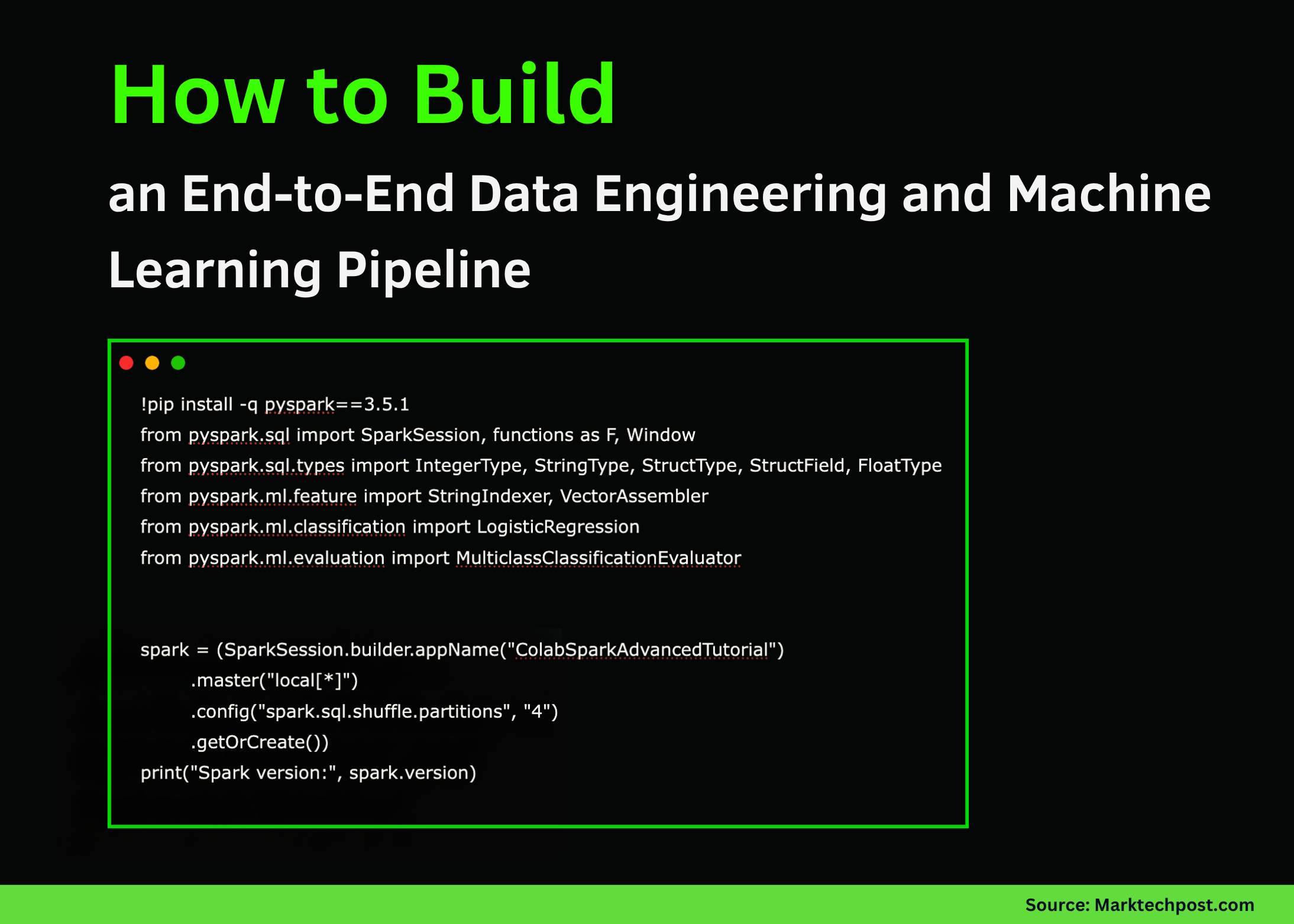
How to Build an End-to-End Data Engineering and Machine Learning Pipeline with Apache Spark and PySpark

This tutorial demonstrates how to utilize Apache Spark's capabilities through PySpark within Google Colab, enabling scalable data processing and machine learning workflows in a single-node environment. It guides users through setting up a Spark session, performing data transformations, executing SQL queries, and applying window functions, illustrating Sparks versatility for analytics tasks even without a distributed cluster. A key innovation is the integration of Sparks distributed data processing with machine learning, exemplified by building and evaluating a logistic regression model to predict user subscription types. The tutorial also covers practical aspects such as saving and reloading data in Parquet format, showcasing how

Google AI Machine Learning
Read More
Research
📄 Towards Data Science

How to Build Machine Learning Projects That Help You Get Hired

Effective machine learning projects that demonstrate practical skills and real-world applications are crucial for securing interviews and employment in the field. Focus areas include developing projects that showcase data preprocessing, model development, and deployment, such as predictive analytics, recommendation systems, and computer vision applications, which align with industry needs and demonstrate tangible impact.

Machine Learning Computer Vision
Read More
Research
📄 Towards Data Science

The Machine Learning Projects Employers Want to See

The article emphasizes the importance of showcasing practical and impactful machine learning projects that demonstrate real-world problem-solving skills to potential employers. It highlights that projects involving data analysis, predictive modeling, and deployment of machine learning modelssuch as recommendation systems, fraud detection, or natural language processingare particularly valued in job applications, as they reflect both technical proficiency and the ability to deliver tangible results.

Machine Learning NLP
Read More
Research
📄 Towards Data Science

The Machine Learning Lessons Ive Learned This Month

In October 2025, significant insights were shared regarding advancements in machine learning, emphasizing the importance of clear documentation through READMEs and the evolving role of Model Interpretability Guides (MIGs). These developments highlight ongoing efforts to improve transparency, reproducibility, and understanding of machine learning models, fostering better collaboration and trust within the data science community.

Machine Learning
Read More
General
📄 MarkTechPost

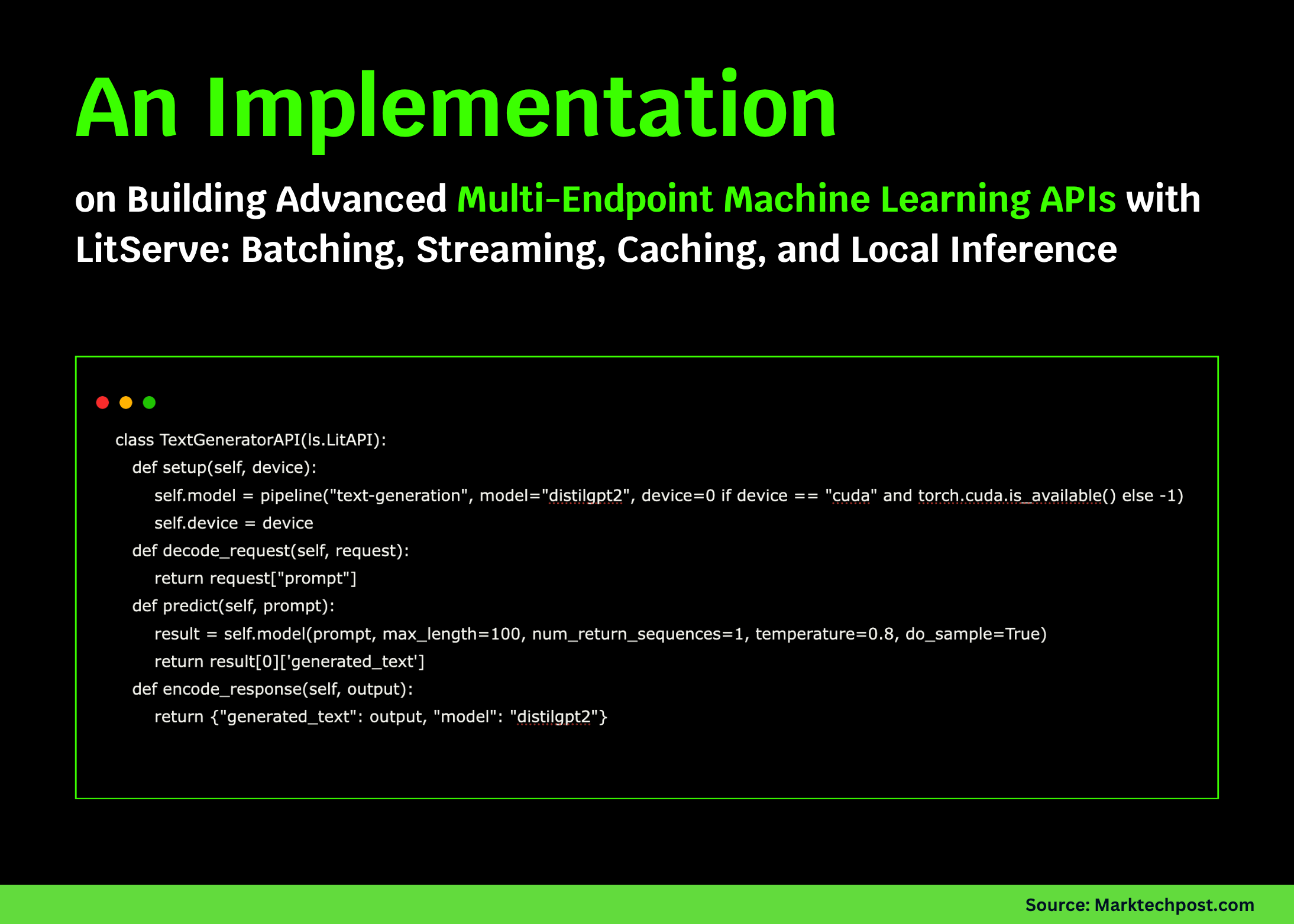
An Implementation on Building Advanced Multi-Endpoint Machine Learning APIs with LitServe: Batching, Streaming, Caching, and Local Inference

LitServe emerges as a lightweight yet robust framework for deploying machine learning models as APIs, enabling developers to create scalable, multi-endpoint serving solutions with minimal effort. The framework supports advanced functionalities such as batching, streaming, multi-task processing, and caching, all of which can be implemented and tested locally without reliance on external APIs, thereby streamlining the development of production-ready ML pipelines. By leveraging LitServe alongside popular libraries like PyTorch and Transformers, developers can efficiently set up, serve, and extend complex ML models, exemplified through use cases like text generation with models such as DistilGPT-2

Machine Learning
Read More
Research
📄 Towards Data Science

TDS Newsletter: What Happens When AI Reaches Its Limits?

Recent developments in large language models (LLMs) have amplified their perceived transformative potential, driven by rapid product launches and extensive media coverage that foster a sense of inevitability around AI's integration into various sectors. However, there is growing discourse on the limitations of AI systems, prompting a reevaluation of their capabilities and the realistic boundaries of current LLMs, especially as they approach their operational or conceptual limits. This shift highlights the importance of understanding not only the innovations but also the constraints of AI technology, emphasizing that despite their impressive performance, LLMs are not infallible and may encounter fundamental challenges

Machine Learning
Read More
Research
📄 Towards Data Science

Why Should We Bother withQuantum Computing in ML?

Quantum Machine Learning (QML) explores the integration of quantum computing principles with machine learning algorithms to potentially achieve exponential speedups and enhanced computational capabilities. Recent discussions focus on evaluating whether quantum computing's advantages justify its current technological challenges, such as qubit stability and error correction, in practical machine learning applications.

Machine Learning
Read More
Research
📄 Towards Data Science

Agentic AI in Finance: Opportunities and Challenges for Indonesia

The financial industry has historically integrated traditional machine learning techniques for predictive modeling, credit scoring, and risk assessment, establishing a foundation for AI-driven decision-making. Recently, the emergence of Large Language Models (LLMs) and Agentic AI presents new opportunities and challenges, potentially transforming financial services through advanced natural language understanding and autonomous decision processes. This evolution signals a shift towards more sophisticated AI applications that could enhance operational efficiency, customer engagement, and risk management in finance, particularly in emerging markets like Indonesia.

Machine Learning NLP +1
Read More
Research
📄 Towards Data Science

How I Tailored the Resume That Landed Me $100K+ Data Science and ML Offers

The article emphasizes the importance of tailoring data science and machine learning resumes to highlight relevant skills, projects, and quantifiable achievements, which significantly increases the likelihood of securing high-paying roles. It illustrates this approach through a personal success story where a customized resume contributed to landing offers exceeding $100,000, demonstrating the impact of strategic presentation and targeted content in competitive job markets.

Machine Learning
Read More
Research
📄 Towards Data Science

Machine Learning Meets Panel Data: What Practitioners Need to Know

The article emphasizes the critical importance of identifying and mitigating hidden data leakage in machine learning models, particularly when working with panel data, to prevent overestimating their performance and real-world utility. It highlights that data leakage can occur subtly through improper data handling or feature engineering, leading to overly optimistic evaluation metrics that do not reflect true model robustness, thereby underscoring the need for rigorous validation practices in practical applications.

Machine Learning
Read More
Research
📄 Towards Data Science

How to Classify Lung Cancer Subtype from DNA Copy Numbers Using PyTorch

A recent development in cancer research involves utilizing PyTorch, a popular deep learning framework, to classify lung cancer subtypes based on DNA copy number variations. This approach leverages advanced machine learning techniques to analyze genomic data, enabling more precise differentiation of cancer subtypes, which is critical for personalized treatment strategies. The methodology exemplifies how data science and deep learning can enhance understanding of cancer genomics, potentially leading to improved diagnostic accuracy and targeted therapies.

Machine Learning Deep Learning
Read More
Research
📄 Towards Data Science

Stop Feeling Lost: How to Master ML System Design

Machine learning system design involves creating scalable, efficient architectures that support the deployment, monitoring, and maintenance of ML models in real-world applications. Key innovations emphasize modularity, data pipeline optimization, and robust infrastructure to handle challenges such as model versioning, latency, and data drift, enabling practitioners to build reliable ML systems.

Machine Learning
Read More
Research
📄 MarkTechPost

Ivy Framework Agnostic Machine Learning Build, Transpile, and Benchmark Across All Major Backends

Ivy introduces a groundbreaking framework that enables the development of machine learning models to be entirely framework-agnostic, supporting seamless execution across NumPy, PyTorch, TensorFlow, and JAX. This innovation leverages code transpilation, unified APIs, and advanced features like Ivy Containers and graph tracing to facilitate portable, efficient, and backend-independent deep learning workflows, significantly simplifying model creation, optimization, and benchmarking without being tied to a specific ecosystem. By providing a fully compatible neural network implementation that operates uniformly across multiple backends, Ivy demonstrates how developers can write once and deploy everywhere, reducing complexity and increasing

Machine Learning Deep Learning
Read More
Research
📈 VentureBeat AI

Here's what's slowing down your AI strategy and how to fix it

A significant development in AI deployment is the creation of highly accurate customer churn prediction models, such as one developed by a research team achieving 90% accuracy, which remains unused due to slow risk review processes within enterprises. This highlights a critical velocity gap where AI research advances rapidly, driven by open-source innovations and model churn, while enterprise adoption lags because of cumbersome governance, risk management, and compliance procedures that delay deployment and stifle productivity. The broader implications reveal that despite the rapid pace of AI innovationfueled by exponential increases in training compute and model complexityenterprise adoption struggles with integrating these

Machine Learning
Read More
Business
📈 VentureBeat AI

Samsung AI researcher's new, open reasoning model TRM outperforms models 10,000X larger on specific problems

Alexia Jolicoeur-Martineau of Samsung's Advanced Institute of Technology has developed the Tiny Recursion Model (TRM), a neural network with only 7 million parameters that rivals or outperforms much larger language models like OpenAI's o3-mini and Google's Gemini 2.5 Pro on challenging reasoning benchmarks. This innovation demonstrates that highly effective AI models can be created affordably through recursive reasoning techniques, challenging the prevailing reliance on massive, resource-intensive foundational models and suggesting a new direction for efficient AI development.

GPT Google AI +3
Read More
Research
📄 Towards Data Science

Visual Pollen Classification Using CNNs and Vision Transformers

Researchers have developed a novel machine learning framework that leverages convolutional neural networks (CNNs) and vision transformers to enhance pollen identification accuracy in ecological and biotechnological applications. This approach addresses the longstanding data scarcity challenge by improving classification performance through advanced deep learning architectures, enabling more precise monitoring of pollen diversity and distribution.

Machine Learning Deep Learning
Read More
Research
📄 Towards Data Science

The Machine Learning Lessons Ive Learned This Month

In September 2025, significant advancements in machine learning were highlighted through the development of custom tools like Ditto and Launchbar, which enhance data retrieval and management capabilities. These innovations enable researchers and practitioners to read extensively and deeply across diverse datasets, facilitating more efficient knowledge extraction and accelerating progress in AI research.

Machine Learning
Read More
Research
📄 Towards Data Science

How to Become a Machine Learning Engineer (Step-by-Step)

The article provides a comprehensive, step-by-step roadmap for aspiring machine learning engineers, emphasizing essential skills such as programming in Python, understanding algorithms, and mastering data preprocessing techniques. It highlights the importance of practical experience through projects, familiarity with popular frameworks like TensorFlow and PyTorch, and continuous learning to stay current with evolving AI methodologies, thereby equipping readers with a structured pathway to enter the field.

Machine Learning
Read More
Research
📄 Towards Data Science

If we use AI to do our work what is our job, then?

Recent advancements in AI have enabled systems to handle a wide range of modalities, including images, text, and audio, transforming industries by automating tasks such as marketing campaign planning and social media management. These developments, driven by machine learning algorithms that have transitioned from research labs into practical applications over the past decade, raise important questions about the future of human employment and the evolving nature of work in an AI-driven landscape.

Machine Learning
Read More
Business
📄 Towards Data Science

Showcasing Your Work on HuggingFace Spaces

Hugging Face Spaces has emerged as a user-friendly, free platform for deploying and sharing machine learning applications, filling the gap left by the discontinuation of free tiers on services like Heroku. The platform simplifies the deployment process for small apps, such as a Streamlit-based stock financial visualization tool, enabling developers to make their projects live and accessible with minimal effort. This development democratizes app sharing, making it easier for data scientists and developers to showcase their work without incurring costs or complex setup procedures. By leveraging Hugging Face Spaces, users can deploy interactive machine learning demos quickly through a streamlined interface

Machine Learning
Read More
Research
📄 Towards Data Science

The Machine Learning Lessons Ive Learned This Month

In August 2025, significant advancements in machine learning workflows emphasized the importance of meticulous logging, comprehensive lab notebooks, and efficient management of overnight computational runs. These practices aim to enhance reproducibility, transparency, and efficiency in AI research, reflecting a growing focus on operational best practices within the data science community.

Machine Learning
Read More
Research
📄 Towards Data Science

Toward Digital Well-Being: Using Generative AI to Detect and Mitigate Bias in Social Networks

Recent research explores how machine learning and generative AI can be leveraged to detect and mitigate bias within social networks, addressing the challenge of unlearning ingrained prejudices. By employing advanced AI models, such as generative adversarial networks (GANs) and natural language processing techniques, the study demonstrates potential methods for identifying biased content and promoting more equitable online interactions. This development signifies a crucial step toward enhancing digital well-being by fostering fairer social media environments through targeted bias reduction strategies.

Machine Learning NLP
Read More
Research
📄 Towards Data Science

Everything I Studied to Become a Machine Learning Engineer (No CS Background)

The article details an individual's self-directed journey to become a machine learning engineer without a formal computer science background, highlighting the specific books, courses, and resources that facilitated their learning process. This approach underscores the growing accessibility of AI and machine learning education, demonstrating that dedicated self-study using targeted materials can enable individuals to acquire advanced technical skills outside traditional academic pathways.

Machine Learning
Read More
Research
📄 Towards Data Science

How to Benchmark Classical Machine Learning Workloads on Google Cloud

Recent developments demonstrate that CPUs can be effectively utilized for practical and cost-efficient machine learning workloads, challenging the traditional reliance on GPUs and specialized hardware. Benchmarking on Google Cloud indicates that well-optimized CPU-based systems can handle classical machine learning tasks with competitive performance and significantly lower costs, making scalable AI deployment more accessible for a broader range of applications.

Google AI Machine Learning
Read More
General
📄 MarkTechPost

Prefix-RFT: A Unified Machine Learning Framework to blend Supervised Fine-Tuning (SFT) and Reinforcement Fine-Tuning (RFT)

A recent development in large language model (LLM) training introduces Prefix-RFT, a unified machine learning framework that combines supervised fine-tuning (SFT) and reinforcement fine-tuning (RFT) to leverage the strengths of both methods. While SFT effectively teaches instruction-following through example-based learning, it often results in rigid behavior and limited generalization, whereas RFT optimizes models for task success via reward signals but can introduce instability. Prefix-RFT aims to integrate these approaches, enabling models to benefit from structured instruction while dynamically adapting to task-specific rewards, thus enhancing both flexibility and performance

Machine Learning
Read More
Ethics
📄 AI News

Rachel James, AbbVie: Harnessing AI for corporate cybersecurity

AbbVie's cybersecurity team, led by Principal AI/ML Threat Intelligence Engineer Rachel James, is leveraging large language models (LLMs) and AI-driven threat intelligence platforms like OpenCTI to enhance threat detection and gap analysis. By analyzing vast amounts of security alerts, the team uses LLMs to identify patterns, duplicates, and vulnerabilities more efficiently, enabling proactive defense measures before attackers can exploit weaknesses. This approach exemplifies how AI, particularly LLMs and structured threat intelligence frameworks like STIX, is transforming cybersecurity from reactive to predictive, allowing organizations to synthesize unstructured data into actionable insights

Machine Learning
Read More
Research
📄 Towards Data Science

Help Your Model Learn the True Signal

A new algorithm-agnostic method, inspired by Cook's distance, has been developed to improve the identification of true signals in machine learning models. This approach enhances the robustness of model diagnostics by evaluating the influence of individual data points across various algorithms, facilitating more accurate detection of influential observations and reducing model bias.

Machine Learning
Read More
Research
📄 Towards Data Science

Capturing and Deploying PyTorch Models with torch.export

PyTorch has introduced a new export feature, demonstrated through its application on a HuggingFace model, which simplifies the deployment process of machine learning models. This enhancement, accessible via the torch.export function, aims to streamline model serialization and deployment workflows, potentially improving efficiency and interoperability across different platforms and frameworks.

Machine Learning

Read More
Research
📄 Towards Data Science

Maximizing AI/ML Model Performance with PyTorch Compilation

Since its introduction in PyTorch 2.0 in March 2023, the development of torch.compile has marked a significant advancement in optimizing AI model performance by enabling just-in-time (JIT) graph compilation within the framework. This innovation aims to enhance execution speed and efficiency while maintaining PyTorchs core strengths of ease of use and Pythonic design, addressing longstanding challenges associated with eager execution. The evolution of torch.compile signifies a strategic shift toward integrating JIT compilation seamlessly into PyTorchs dynamic environment, potentially transforming how developers optimize deep learning models without sacrificing flexibility. This development not only improves computational efficiency

Machine Learning Deep Learning
Read More
Technology
📄 MarkTechPost

Why Docker Matters for Artificial Intelligence AI Stack: Reproducibility, Portability, and Environment Parity

Docker has become an essential tool for modern AI and machine learning workflows due to its ability to ensure reproducibility, portability, and environment parity. By encapsulating all code, libraries, system tools, and environment variables within Docker containers, AI practitioners can precisely define and recreate consistent environments across different machines, addressing longstanding issues like the "works on my machine" problem and enabling reliable verification and auditing of models and experiments. This containerization approach facilitates version control of dependencies and runtime configurations, allowing teams to rerun experiments with exact environmental fidelity, thereby enhancing scientific credibility and collaboration. As AI systems grow increasingly complex and

Machine Learning
Read More
Research
📄 MarkTechPost

NVIDIA XGBoost 3.0: Training Terabyte-Scale Datasets with Grace Hopper Superchip

NVIDIA has released XGBoost 3.0, enabling training of gradient-boosted decision tree models on datasets up to 1 terabyte using a single GH200 Grace Hopper Superchip. This breakthrough leverages the new External-Memory Quantile DMatrix and the chips coherent memory architecture with 900GB/s NVLink-C2C bandwidth to stream compressed data directly from host RAM to GPU, overcoming previous memory limitations and simplifying large-scale machine learning workflows.

NVIDIA Machine Learning
Read More
Research
📄 Towards Data Science

Stellar Flare Detection and Prediction Using Clustering and Machine Learning

Researchers have developed a novel approach that integrates unsupervised clustering with supervised machine learning techniques to enhance the detection and prediction of stellar flares. This hybrid methodology leverages clustering algorithms to identify patterns in stellar data without prior labels, which are then used to train supervised models for accurate flare prediction, potentially improving real-time monitoring of stellar activity and advancing astrophysical research.

Machine Learning
Read More
Research
📄 MarkTechPost

Meet Trackio: The Free, Local-First, Open-Source Experiment Tracker Python Library that Simplifies and Enhances Machine Learning Workflows

Trackio is an open-source, Python-based experiment tracking library developed by Hugging Face and Gradio that offers a lightweight, local-first alternative to proprietary solutions like wandb. Its design emphasizes simplicity and flexibility, allowing seamless integration as a drop-in replacement for existing experiment tracking workflows with minimal code modifications, thanks to compatibility with core API calls such as wandb.init, wandb.log, and wandb.finish. The key innovation of Trackio lies in its local-first architecture, which ensures that experiment data is stored locally by default, enhancing privacy and access speed, while optional sharing features facilitate collaboration without

Machine Learning
Read More
Research
📄 Towards Data Science

The Misconception of Retraining: Why Model Refresh Isnt Always the Fix

The article emphasizes that in machine learning, performance degradation is often due to misinterpreted signals rather than outdated model weights, highlighting that retraining is not always the optimal solution. It underscores the importance of understanding the underlying data and signals to determine when model refreshes are necessary, advocating for more nuanced approaches to model maintenance rather than default retraining.

Machine Learning
Read More
Research
📄 MarkTechPost

Unsupervised System 2 Thinking: The Next Leap in Machine Learning with Energy-Based Transformers

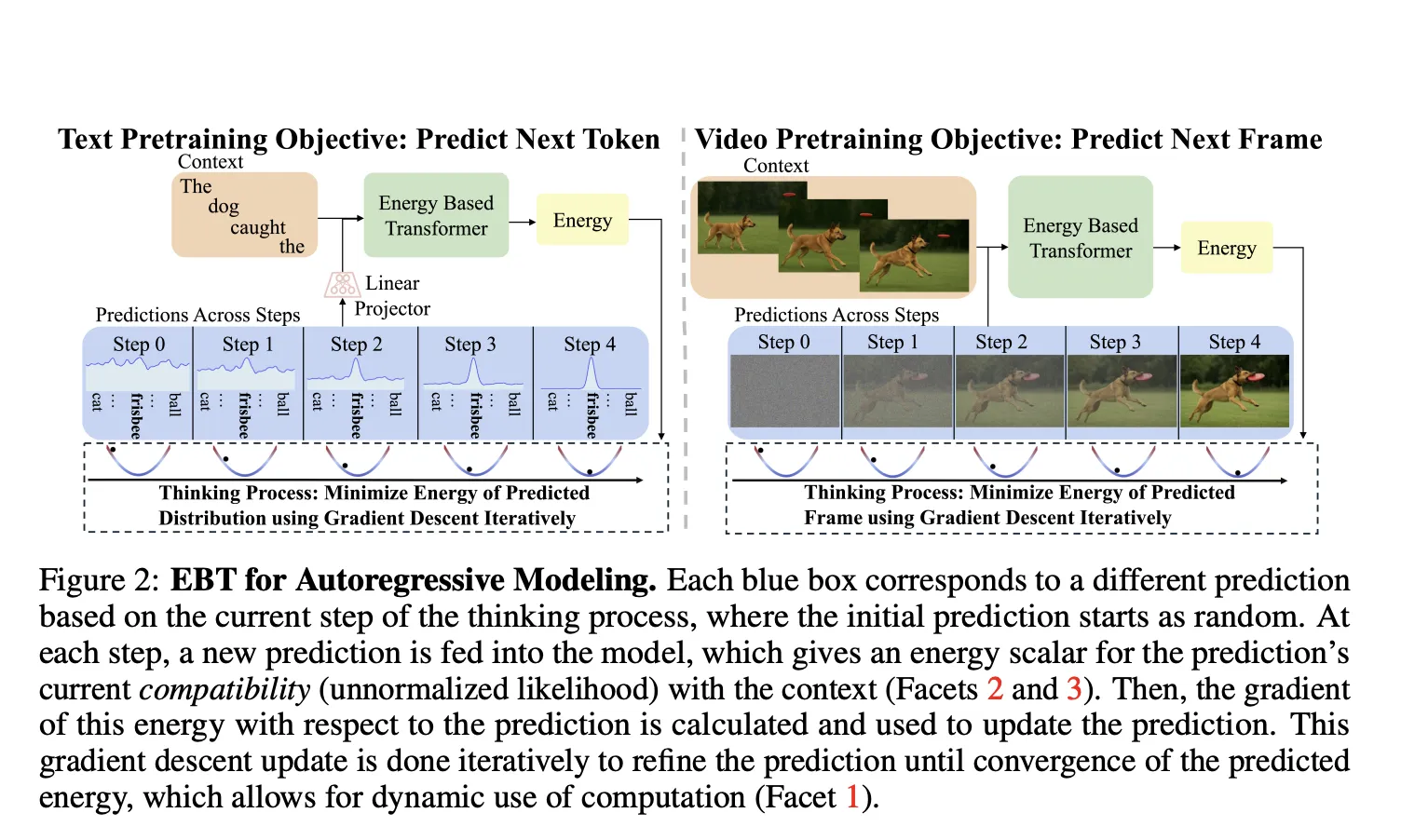
Energy-Based Transformers (EBTs) represent a significant advancement in AI by enabling unsupervised "System 2 Thinking," which involves slow, analytical, and multi-step reasoning akin to human cognition. Unlike traditional models that rely on domain-specific supervision, EBTs learn an energy function to evaluate the compatibility of input-prediction pairs, allowing machines to perform complex reasoning without restrictive training signals. This architectural innovation addresses the limitations of current AI systems that excel at fast, intuitive "System 1" tasks but struggle with deliberate reasoning, especially in out-of-distribution scenarios. By focusing on energy-based learning

Machine Learning
Read More
Research
📄 MarkTechPost

SYNCOGEN: A Machine Learning Framework for Synthesizable 3D Molecular Generation Through Joint Graph and Coordinate Modeling

SYNCOGEN introduces a novel machine learning framework that jointly models molecular graphs and 3D atomic coordinates to generate synthesizable molecules, addressing a critical gap in drug discovery. By integrating 2D structural information with 3D geometry, this approach ensures that generated molecules are not only chemically valid and functionally promising but also practically synthesizable using known chemical reactions and building blocks. This advancement enhances the reliability of AI-driven molecular design, bridging the gap between theoretical compound generation and laboratory feasibility, and holds significant potential for accelerating the development of new pharmaceuticals and chemicals.

Machine Learning

Read More
Research
📄 Towards Data Science

The Power of Building from Scratch

Mauro Di Pietro emphasizes the importance of utilizing open-source tools to develop AI agents, highlighting how this approach effectively bridges theoretical concepts with practical implementation. He also expresses a nostalgic appreciation for scikit-learn, underscoring its foundational role in machine learning development and its influence on modern AI building practices.

Machine Learning
Read More
Research
📄 MarkTechPost

Meta AI Introduces UMA (Universal Models for Atoms): A Family of Universal Models for Atoms

Meta AI has introduced UMA (Universal Models for Atoms), a family of universal machine learning interatomic potentials (MLIPs) designed to approximate the accuracy of Density Functional Theory (DFT) while drastically reducing computational costs, achieving inference times of less than a second compared to hours for traditional DFT calculations. These models leverage scaling relations inspired by large language models (LLMs) to optimize the balance between dataset size, model complexity, and computational efficiency, addressing the longstanding challenge of creating MLIPs that generalize across diverse chemical tasks. By training on extensive datasets such as Alexandria and OMat24, UMA

Meta AI Machine Learning

Read More
Research
📄 Towards Data Science

How to Perform Effective Data Cleaning for Machine Learning

Effective data cleaning is essential for enhancing machine learning model performance, as it addresses issues such as missing values, outliers, and inconsistent data that can impair model accuracy. The article outlines key techniquesincluding data imputation, normalization, and outlier detectionhighlighting their importance in preparing high-quality datasets that lead to more reliable and robust machine learning outcomes.

Machine Learning

Read More
Research
📄 Towards Data Science

Build Interactive Machine Learning Apps with Gradio

Gradio has introduced a streamlined platform that enables developers to rapidly create interactive machine learning applications, including text-to-speech demos, within minutes. This tool simplifies the deployment process by providing user-friendly interfaces and pre-built components, empowering users to showcase AI models without extensive coding, thereby accelerating innovation and experimentation in AI-driven applications.

Machine Learning
Read More
Research
📄 Towards Data Science

Build Algorithm-Agnostic ML Pipelines in aBreeze

A new open-source Python package has been introduced to simplify the construction of machine learning pipelines, enabling more efficient and flexible workflows. This framework is algorithm-agnostic, allowing data scientists to seamlessly integrate various models and preprocessing steps without being tied to specific algorithms, thereby enhancing modularity and scalability in ML development.

Machine Learning

Read More
Research
📄 Towards Data Science

My Honest Advice for Aspiring Machine Learning Engineers

Becoming a proficient machine learning engineer requires a strong foundation in programming, mathematics, and data science, along with practical experience in deploying models in real-world environments. The article emphasizes the importance of continuous learning, hands-on projects, and understanding both the theoretical and operational aspects of machine learning systems to succeed in the field.

Machine Learning
Read More
Research
📄 Towards Data Science

STOP Building Useless ML Projects What Actually Works

The article emphasizes the importance of selecting impactful and practical machine learning projects that demonstrate real-world problem-solving skills to enhance employability. It advocates for focusing on projects that address tangible challenges and showcase technical proficiency, rather than creating superficial or "useless" models, thereby increasing the likelihood of attracting hiring managers' attention.

Machine Learning Transformers

Read More
Research
📄 Towards Data Science

Lessons Learned After 6.5 Years Of Machine Learning

After 6.5 years of extensive research and experimentation, significant insights have been gained into the evolving landscape of machine learning, emphasizing the importance of deep work, emerging trends, and data-driven approaches. This period has highlighted critical developments in understanding model performance, optimization techniques, and the integration of large-scale data to enhance AI capabilities, paving the way for more robust and efficient machine learning systems.

Machine Learning

Read More
Research
📄 Towards Data Science

Trying to Stay Sane in the Age ofAI

The article highlights the mental and emotional challenges faced by machine learning engineers amid rapid AI advancements, emphasizing the importance of maintaining mental resilience. It discusses practical strategies such as setting boundaries, fostering community support, and adopting mindful practices to navigate the intense pressures of developing and deploying cutting-edge AI systems.

Machine Learning
Read More
Research
📄 Towards Data Science

How I Automated My Machine Learning Workflow with Just 10 Lines ofPython

The article highlights how LazyPredict and PyCaret streamline machine learning workflows by automating model selection, training, and evaluation, enabling users to achieve high-performance results with minimal coding. By leveraging these tools, developers can bypass extensive preprocessing and model tuning, reducing the process to just 10 lines of Python code, thus significantly accelerating deployment and experimentation in data science projects.

Machine Learning
Read More
Research
📄 Towards Data Science

Data Drift Is Not the Actual Problem: Your Monitoring Strategy Is

Effective monitoring in machine learning is often hindered by the challenge of identifying meaningful signals amid data drift, which can be mistaken for noise. The core innovation emphasizes that the true issue lies not in detecting data drift itself but in developing robust monitoring strategies that accurately interpret and respond to these changes, ensuring models remain reliable and performant over time.

Machine Learning
Read More
Business
📄 Towards Data Science

Landing your First Machine Learning Job: Startup vs Big Tech vs Academia

The article provides a comprehensive overview of strategies for securing a first machine learning position across different sectors, including startups, large technology companies, and academia. It emphasizes tailored approaches based on the unique requirements and expectations of each environment, such as technical skillsets, project portfolios, and networking tactics, to enhance candidates' chances of success in these competitive fields.

Machine Learning
Read More
Research
📄 Towards Data Science

Evaluating LLMs for Inference, or Lessons from Teaching for Machine Learning

Researchers have developed a novel evaluation framework for large language models (LLMs) that draws parallels to grading student papers, emphasizing the importance of assessing inference capabilities and reasoning skills. This approach highlights the need for more nuanced benchmarks beyond traditional accuracy metrics, aiming to better understand LLMs' reasoning processes and improve their reliability in real-world applications.

Machine Learning
Read More
Research
📄 arXiv Machine Learning

Defining Foundation Models for Computational Science: A Call for Clarity and Rigor

This paper highlights the need for a clear, formal definition of foundation models in computational science, emphasizing core qualities like generality, reusability, and scalability. It introduces the Data-Driven Finite Element Method (DD-FEM), which combines traditional numerical methods with data-driven learning to address challenges such as scalability and physics consistency, providing a foundation for future development in the field.

Machine Learning Computer Vision +1
Read More
Research
📄 arXiv Machine Learning

Machine Learning Models Have a Supply Chain Problem

The paper highlights the supply-chain risks associated with open machine learning models, such as malicious replacements or training on compromised data, which have already been exploited in attacks. It proposes using Sigstore to enhance transparency by enabling model publishers to sign their models and verify dataset properties, thereby improving security in the open ML ecosystem.

Machine Learning
Read More
Research
📄 arXiv Machine Learning

PGLearn -- An Open-Source Learning Toolkit for Optimal Power Flow

The paper introduces PGLearn, a comprehensive suite of standardized datasets and evaluation tools designed to facilitate research in machine learning applications for Optimal Power Flow (OPF) problems, addressing current challenges of data scarcity and inconsistent benchmarking. By providing realistic, diverse datasets and a robust benchmarking toolkit, PGLearn aims to democratize access, promote fair comparison, and accelerate innovation in ML-driven energy grid optimization.

Machine Learning Transformers
Read More
Research
📄 arXiv Machine Learning

X-Factor: Quality Is a Dataset-Intrinsic Property

Research indicates that dataset quality is an intrinsic property, independent of size, class balance, and model architecture, and significantly influences machine learning performance. The study finds that dataset quality emerges from the quality of its constituent classes, making it a key factor alongside size, class balance, and architecture for optimizing classifiers.

Machine Learning
Read More
Research
🎓 MIT Technology Review

Fueling seamless AI at scale

AI's growing computational demands from large models and collaborative agents necessitate a new computing paradigm, emphasizing advancements in hardware, machine learning efficiency, and system integration. However, the evolution of silicon technology faces challenges as Moore's Law approaches its physical and economic limits, impacting AI's scalability and performance.

Machine Learning Academic
Read More