Page 57 of 130 • 1560 Total Articles

createLiveAI

Continue exploring the latest AI breakthroughs, technology insights, and industry analysis. Page 57 of our comprehensive AI news collection.

📰 Latest Intelligence

Showing 12 articles on page 57 of 130

Live feed
Business
🎓 MIT Tech Review AI

Partnering with generative AI in the finance function

Generative AI, particularly large language models (LLMs), is poised to significantly enhance the finance function by automating routine tasks such as report generation, investor communication, and strategic summarization, thereby allowing CFOs to focus on high-value strategic advising amid ongoing geopolitical and financial uncertainties. Experts like MIT Sloan's Andrew W. Lo highlight that while LLMs cannot replace CFOs, they can alleviate administrative burdens by providing initial drafts and summaries that streamline decision-making processes. In addition to supporting strategic activities, generative AI shows promise in treasury functions, including cash flow, revenue, and liquidity forecasting, as

Academic
Read More
Technology
📄 MarkTechPost

OpenAI Adds Full MCP Tool Support in ChatGPT Developer Mode: Enabling Write Actions, Workflow Automation, and Enterprise Integrations

OpenAI has significantly enhanced ChatGPTs developer mode by enabling full support for the Model Context Protocol (MCP), allowing connectors to perform write actions rather than solely read operations. This advancement transforms ChatGPT from a passive information retrieval tool into an active automation and orchestration platform, enabling developers to directly update systems, trigger workflows, and execute multi-step automations within conversations, such as modifying Jira tickets or initiating Zapier workflows. The technical foundation of this upgrade is based on the MCP framework, which standardizes how large language models interact with external services via structured protocols and JSON schemas. By supporting write capabilities

Research
📄 MarkTechPost

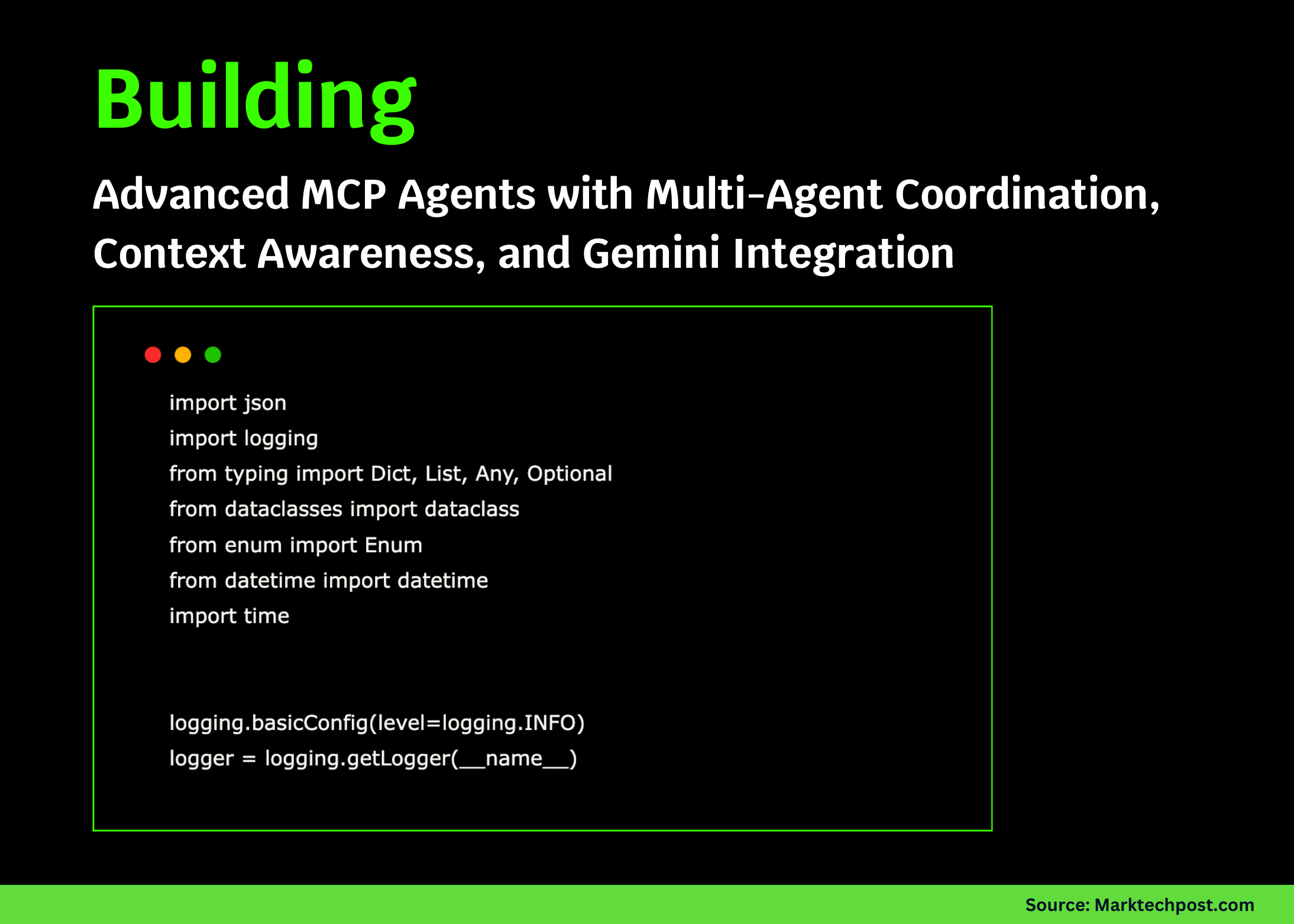
Building Advanced MCP (Model Context Protocol) Agents with Multi-Agent Coordination, Context Awareness, and Gemini Integration

A recent tutorial demonstrates the development of advanced Model Context Protocol (MCP) agents designed for seamless operation within Jupyter and Google Colab environments, emphasizing multi-agent coordination, context awareness, and dynamic tool integration. These agents are structured to specialize in roles such as research, analysis, and execution, forming a collaborative swarm capable of managing complex tasks through effective memory management and role-specific functions. The implementation incorporates sophisticated technical features, including the integration of Google's Gemini API for enhanced generative capabilities, with fallback mechanisms in place if the API is unavailable. The approach leverages Python libraries for data handling, logging,

Google AI
Read More
Research
📄 MarkTechPost

MCP Team Launches the Preview Version of the MCP Registry: A Federated Discovery Layer for Enterprise AI

The Model Context Protocol (MCP) team has introduced a preview version of the MCP Registry, a federated discovery system designed to enhance the deployment of enterprise AI by providing a decentralized, DNS-like directory for MCP servers. This architecture enables both public and private server discovery, allowing organizations to securely publish and access AI contexts without risking internal privacy or security, thus addressing key challenges in making enterprise AI production-ready. By adopting a federated model, the MCP Registry offers a scalable and secure solution that balances the need for a centralized authoritative source with organizational flexibility. This approach mirrors internet addressability solutions, facilitating seamless

Research
📄 Towards Data Science

The Hungarian Algorithm and Its Applications in ComputerVision

Recent advancements in multi-object tracking (MOT) have integrated the Hungarian algorithm to enhance the accuracy and efficiency of object association across video frames. Traditionally, MOT algorithms rely on detectors like YOLO to identify objects in individual frames, followed by a matching process to maintain consistent tracking; however, incorporating the Hungarian algorithm enables optimal assignment of detected objects between frames, reducing errors caused by occlusions and missed detections. This development signifies a significant step toward more robust and precise multi-object tracking systems in computer vision applications, including surveillance, autonomous driving, and video analysis.

Computer Vision Autonomous Systems
Read More
Research
📄 Towards Data Science

LangGraph 201: Adding Human Oversight to Your Deep Research Agent

Recent advancements highlight the importance of integrating human oversight into large language model (LLM)-based AI agents to mitigate the risk of losing control during complex workflows. While LLMs have achieved remarkable capabilities, they still lack full autonomy in intricate tasks, necessitating mechanisms for human intervention to ensure reliability and accuracy. This development underscores a shift toward hybrid AI systems that combine autonomous processing with human oversight, enhancing operational stability and trustworthiness in practical applications.

Autonomous Systems
Read More
Research
🎓 MIT Tech Review AI

Three big things we still dont know about AIs energy burden

Recent disclosures from AI companies have begun to shed light on the energy consumption of leading models like ChatGPT and Googles Gemini, with OpenAIs Sam Altman estimating that an average ChatGPT query consumes approximately 0.34 watt-hours of energy, and Google reporting that Gemini responses use about 0.24 watt-hours. These figures mark a significant breakthrough in transparency, as prior to these disclosures, companies like Google, OpenAI, and Microsoft refused to release specific energy usage data, making it difficult for researchers to accurately assess AIs environmental impact. This emerging transparency is crucial for understanding AIs contribution

GPT Google AI +2
Read More
Research
📄 The Algorithmic Bridge

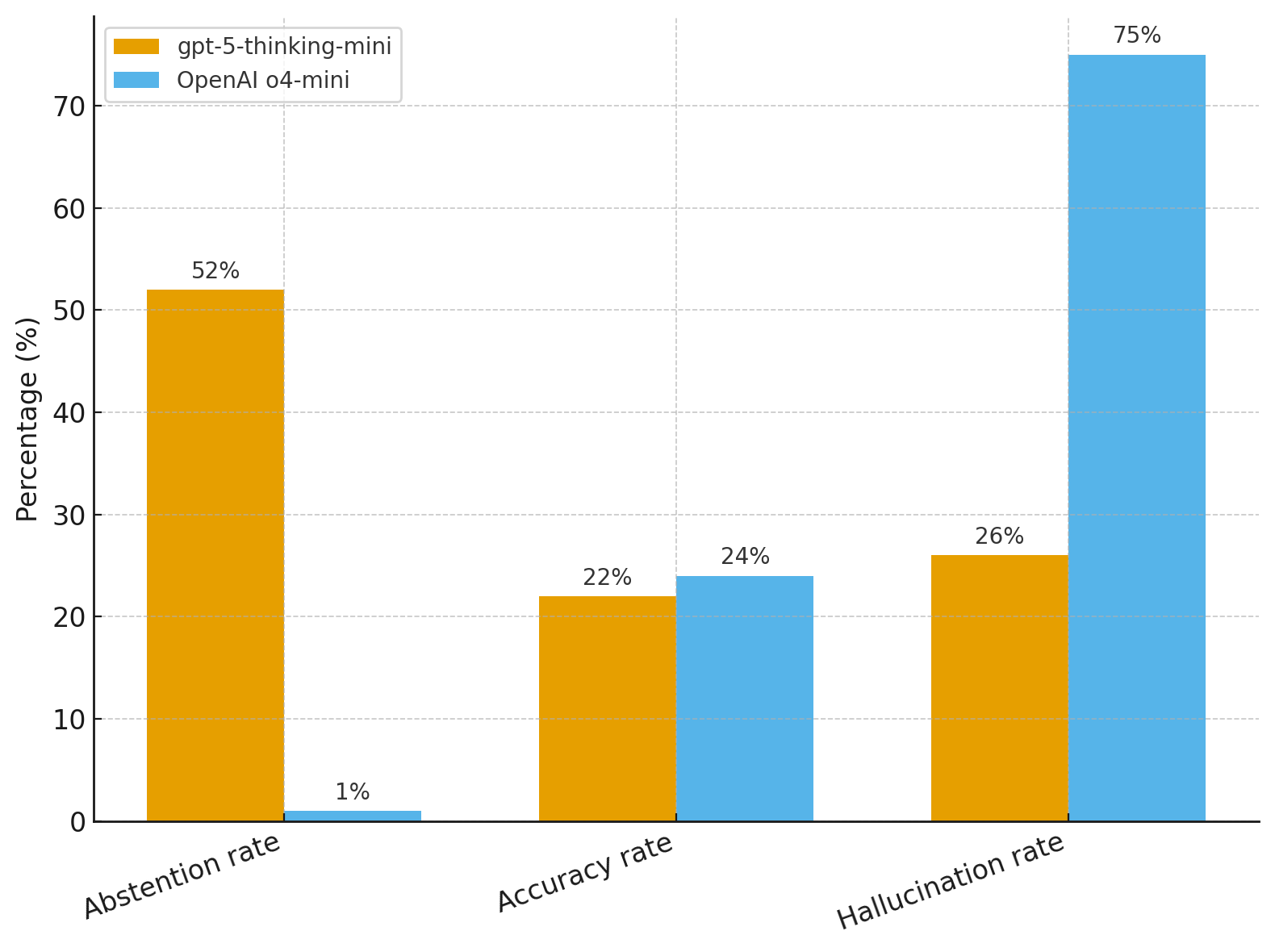
OpenAI Researchers Have Discovered Why Language Models Hallucinate

OpenAI's latest research paper, "Why Language Models Hallucinate," identifies the root cause of AI hallucinations as a fundamental mismatch between training objectives and practical use: current training rewards guessing correct answers rather than acknowledging uncertainty, leading models to fabricate information when unsure. The paper suggests that revising training and evaluation methods to prioritize uncertainty acknowledgment over blind guessing could significantly reduce hallucinations, marking a critical step toward making AI chatbots reliable enough for serious economic and workflow integration.

Research
📄 MarkTechPost

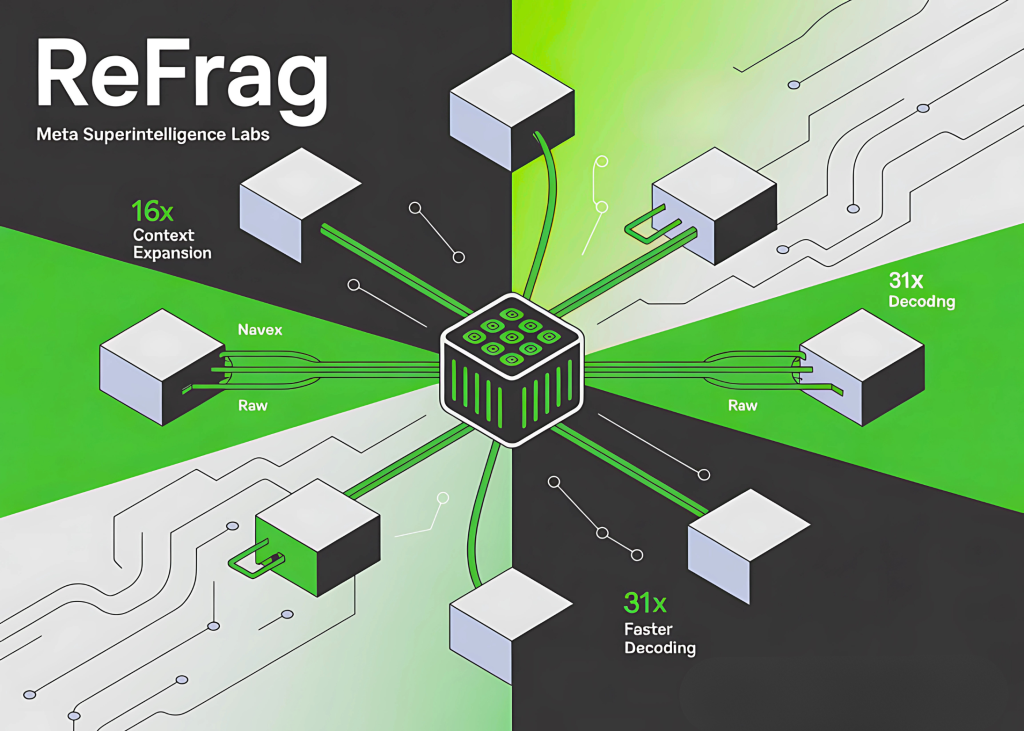
Meta Superintelligence Labs Introduces REFRAG: Scaling RAG with 16 Longer Contexts and 31 Faster Decoding

Meta Superintelligence Labs, in collaboration with the National University of Singapore and Rice University, has developed REFRAG (REpresentation For RAG), a novel decoding framework that significantly enhances retrieval-augmented generation (RAG) efficiency by extending large language model (LLM) context windows by 16 times and achieving up to a 30.85-fold reduction in time-to-first-token (TTFT) without sacrificing accuracy. This advancement addresses the quadratic scaling problem of the attention mechanism in LLMs, which hampers long-context processing due to increased computational and memory demands, especially in RAG

Meta AI Transformers
Read More

Page 57 of 130 • Showing articles 673-684 of 1560