Page 49 of 130 • 1560 Total Articles

createLiveAI

Continue exploring the latest AI breakthroughs, technology insights, and industry analysis. Page 49 of our comprehensive AI news collection.

📰 Latest Intelligence

Showing 12 articles on page 49 of 130

Live feed
Business
📈 VentureBeat AI

Is vibe coding ruining a generation of engineers?

AI-powered coding tools, such as Claude Code built on the Claude 3.7 Sonnet model, are transforming software development by enabling developers to generate well-structured code from natural language prompts, automate bug detection, and refactor code efficiently. These advancements significantly reduce manual effort, allowing for faster prototyping, iterative development, and cost-effective team structures, with some startups reporting that AI handles up to 95% of their coding tasks. However, this rapid adoption raises concerns about the long-term impact on developer expertise and the labor market. As AI tools simplify complex tasks and accelerate learning curves for junior

Claude Microsoft +1
Read More
General
📄 MarkTechPost

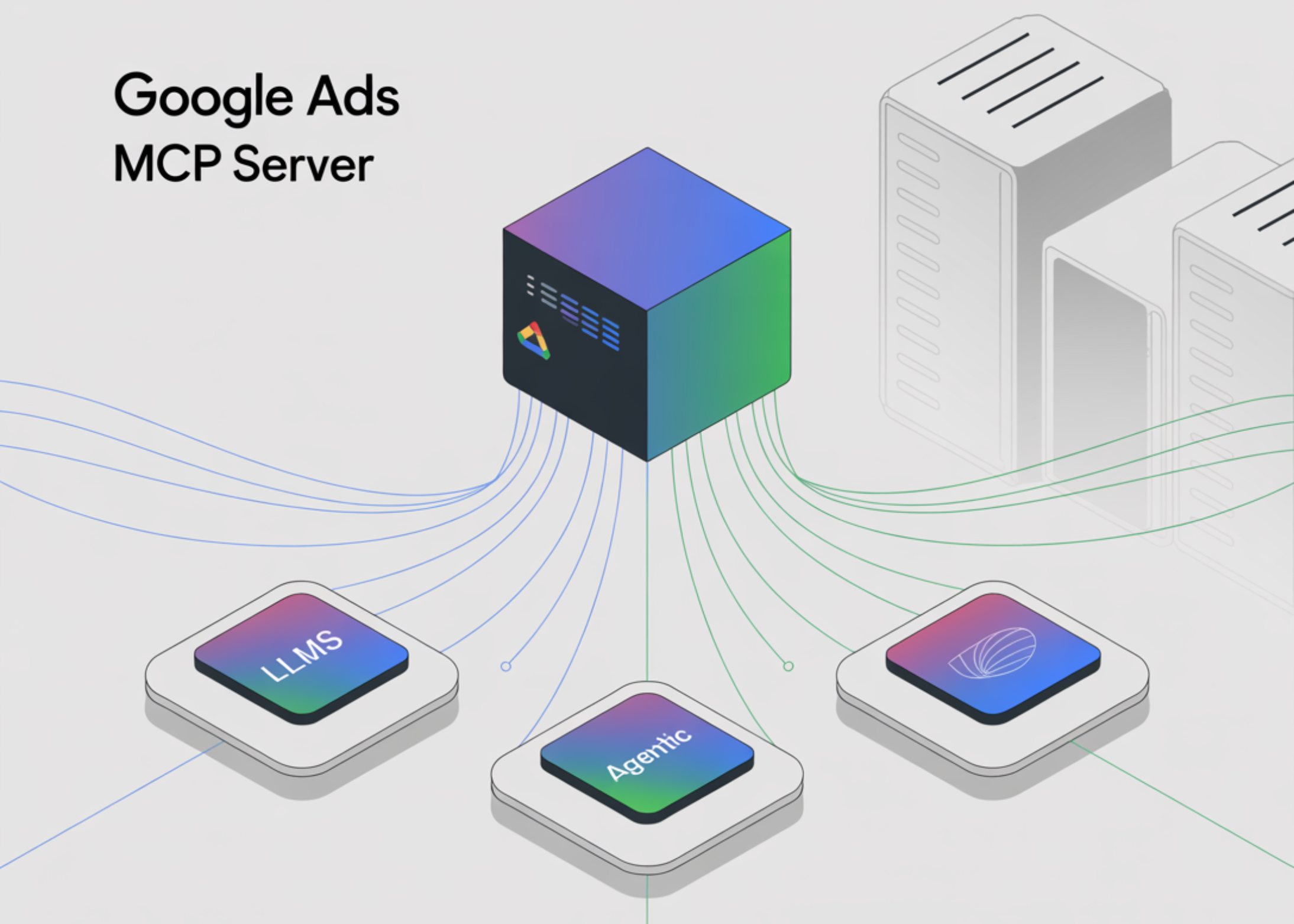
Google Open-Sources an MCP Server for the Google Ads API, Bringing LLM-Native Access to Ads Data

Google has open-sourced a Model Context Protocol (MCP) server implemented in Python that provides read-only access to the Google Ads API, facilitating integration with large language models (LLMs) and agentic applications. This MCP server exposes two primary tools: search, which allows GAQL queries over ad accounts, and list_accessible_customers, enabling enumeration of customer resources, thereby streamlining access to campaign telemetry, budget pacing, and performance diagnostics without requiring bespoke SDKs. The development of this MCP server marks a significant step toward standardizing interfaces for external system integration with AI models, reducing complexity and

Google AI
Read More
Business
📈 VentureBeat AI

Will updating your AI agents help or hamper their performance? Raindrop's new tool Experiments tells you

Raindrop, an AI applications observability startup, has introduced "Experiments," a pioneering A/B testing suite tailored for enterprise AI agents, enabling companies to evaluate the impact of model updates, tool integrations, and instruction modifications on real user interactions. This new analytics feature extends Raindrops existing monitoring tools, providing a data-driven approach to understanding how changes influence AI performance across millions of user engagements, with visual results indicating performance improvements or declines. The platform aims to enhance transparency and measurability in AI development by allowing teams to track nuanced factors such as tool usage, user intent, and demographic

Research
📈 VentureBeat AI

Nvidia researchers boost LLMs reasoning skills by getting them to 'think' during pre-training

Researchers at Nvidia have introduced Reinforcement Learning Pre-training (RLP), a novel approach that incorporates reinforcement learning into the initial training phase of large language models (LLMs), encouraging models to develop independent reasoning capabilities early on. Unlike traditional methods that rely on sequential pre-training followed by fine-tuning with curated datasets, RLP enables models to learn complex reasoning directly from plain text, fostering more autonomous and adaptable AI systems. This technique treats reasoning as an action within the pretraining process, allowing models to "think for themselves" before predicting subsequent tokens, which significantly enhances their ability to perform complex reasoning tasks downstream

GPT NVIDIA +3
Read More
Research
📄 Towards Data Science

How the Rise of Tabular Foundation Models Is Reshaping Data Science

The emergence of tabular foundation models marks a significant advancement in data science, enabling more robust and scalable analysis of structured data. These models leverage large-scale pretraining techniques similar to those used in natural language processing, allowing for improved performance across various data tasks such as classification, regression, and anomaly detection, thereby transforming traditional data analysis workflows.

Technology
📄 AI News

Can Ciscos new AI data centre router tackle the industrys biggest infrastructure bottleneck?

Cisco has introduced the 8223 routing system, claiming it to be the industrys first fixed router capable of delivering 51.2 terabits per second, specifically designed to enhance AI data center interconnectivity across multiple facilities. Powered by the new Silicon One P200 chip, this hardware aims to address the growing infrastructure bottleneck faced by AI workloads, enabling scalable and high-bandwidth connections essential for distributed AI processing. This development positions Cisco within a competitive landscape that includes Broadcom and Nvidia, both of which have announced high-capacity networking solutionsBroadcom with its Jericho 4 switch

Business
📄 AI News

AI value remains elusive despite soaring investment

Despite significant investment in AI, a Red Hat report reveals that 89% of businesses have yet to realize tangible customer value from their AI initiatives, highlighting persistent challenges in effective deployment. Organizations are projecting a 32% increase in AI spending by 2026, with AI and security remaining top IT priorities, yet barriers such as high implementation costs, data privacy concerns, and integration difficulties hinder progress. Notably, the widespread use of "shadow AI," with 83% of firms reporting unauthorized employee use of AI tools, underscores a disconnect between formal strategies and operational practices, raising security and compliance risks.

Research
📄 MarkTechPost

RA3: Mid-Training with Temporal Action Abstractions for Faster Reinforcement Learning (RL) Post-Training in Code LLMs

Apple's recent research introduces RA3 (Reasoning as Action Abstractions), an Expectation-Maximization (EM)-style procedure designed to enhance reinforcement learning (RL) in code large language models (LLMs). RA3 learns temporally consistent latent actions from expert traces during mid-training, enabling the pruning of the action space to a compact, near-optimal subset and reducing the effective planning horizon, which accelerates RL convergence and improves downstream performance on benchmarks like HumanEval and MBPP by approximately 8 and 4 points, respectively. This approach formalizes the role of mid-training in shaping

Research
📈 VentureBeat AI

New memory framework builds AI agents that can handle the real world's unpredictability

Researchers at the University of Illinois Urbana-Champaign and Cloud AI Research have developed ReasoningBank, a novel framework that enables large language model (LLM) agents to build a memory bank by distilling generalizable reasoning strategies from both successful and failed problem-solving attempts. This memory allows agents to avoid repeating past mistakes and improve decision-making over time, significantly enhancing performance and efficiency when combined with scaling techniques across tasks like web browsing and software engineering. Unlike prior memory approaches that store raw interaction logs or only successful examples, ReasoningBank captures deeper reasoning patterns, enabling LLM agents to adapt continuously in long-running

Claude Google AI
Read More
Business
📈 VentureBeat AI

Samsung AI researcher's new, open reasoning model TRM outperforms models 10,000X larger on specific problems

Alexia Jolicoeur-Martineau of Samsung's Advanced Institute of Technology has developed the Tiny Recursion Model (TRM), a neural network with only 7 million parameters that rivals or outperforms much larger language models like OpenAI's o3-mini and Google's Gemini 2.5 Pro on challenging reasoning benchmarks. This innovation demonstrates that highly effective AI models can be created affordably through recursive reasoning techniques, challenging the prevailing reliance on massive, resource-intensive foundational models and suggesting a new direction for efficient AI development.

GPT Google AI +3
Read More
Business
📈 VentureBeat AI

AI21s Jamba reasoning 3B redefines what 'small' means in LLMs 250K context on a laptop

AI21 Labs has introduced Jamba Reasoning 3B, a compact open-source AI model capable of extended reasoning, code generation, and ground-truth responses, designed to run efficiently on edge devices such as laptops and smartphones. Leveraging the Mamba architecture combined with Transformers, the model supports a 250,000-token window, enabling it to perform inference 2-4 times faster than previous models, with tested speeds of 35 tokens per second on a MacBook Pro, while significantly reducing memory and computational requirements. This development addresses a key industry challenge by shifting inference workloads from data centers to

Google AI Meta AI +2
Read More
Business
📄 AI News

Samsungs tiny AI model beats giant reasoning LLMs

A recent breakthrough from Samsung AI researchers introduces the Tiny Recursive Model (TRM), a 7-million-parameter neural network that outperforms much larger Large Language Models (LLMs) in complex reasoning tasks, such as the ARC-AGI intelligence benchmark. Challenging the industry norm that larger models are inherently more capable, TRM demonstrates that parameter efficiency and innovative architecture can achieve state-of-the-art results, offering a more sustainable and scalable approach to AI development. This development addresses key limitations of traditional LLMs, which often struggle with multi-step reasoning due to their token-by-token generation process,

Deep Learning
Read More

Page 49 of 130 • Showing articles 577-588 of 1560