Page 41 of 130 • 1560 Total Articles

createLiveAI

Continue exploring the latest AI breakthroughs, technology insights, and industry analysis. Page 41 of our comprehensive AI news collection.

📰 Latest Intelligence

Showing 12 articles on page 41 of 130

Live feed
General
📄 MarkTechPost

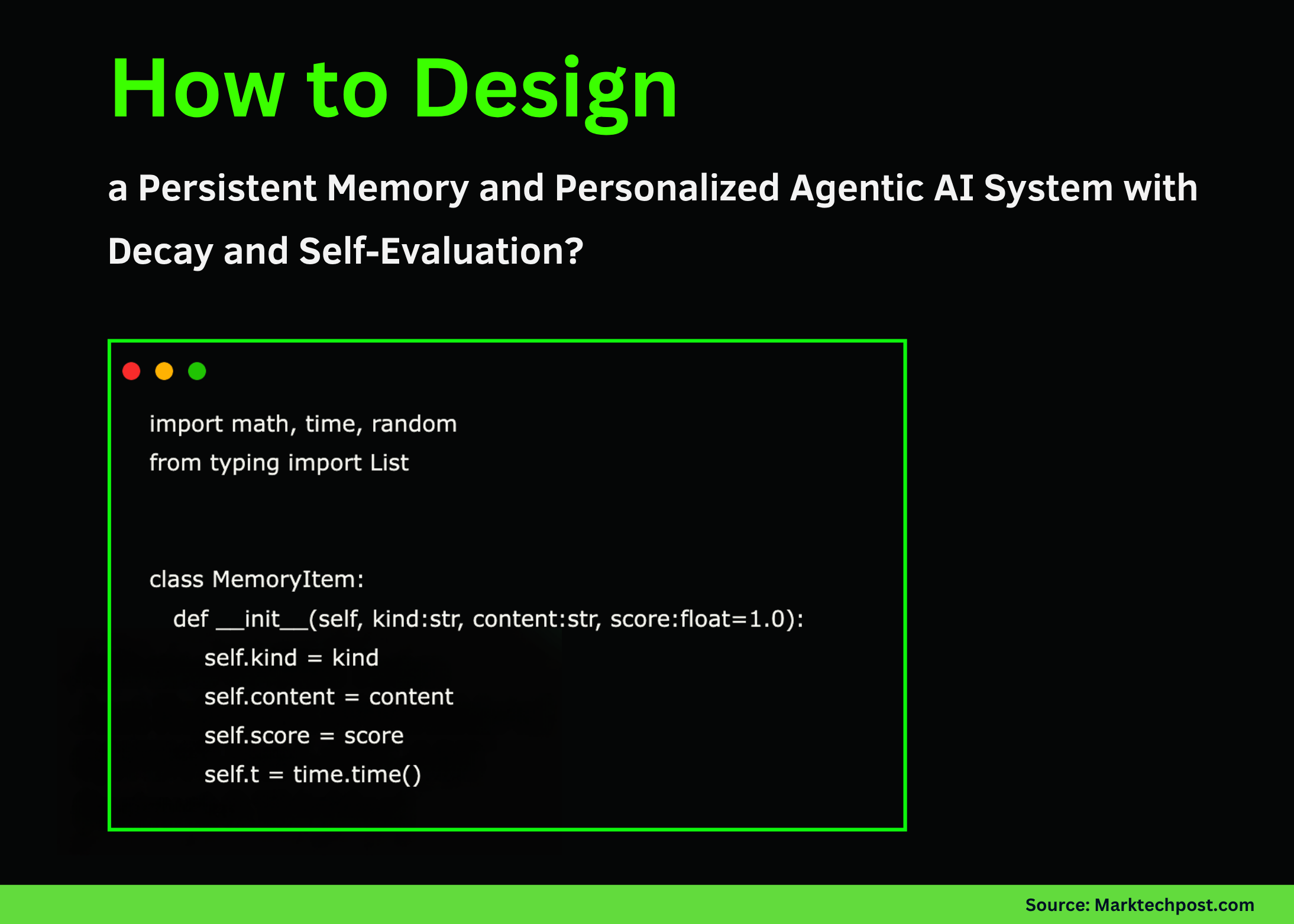
How to Design a Persistent Memory and Personalized Agentic AI System with Decay and Self-Evaluation?

A recent tutorial demonstrates the development of an intelligent agent equipped with persistent memory and personalization capabilities, utilizing rule-based logic to emulate how modern agentic AI frameworks store and recall contextual information. The system incorporates mechanisms such as memory decay, modeled through exponential half-life functions, to prevent overload and ensure relevant information remains prioritized, enabling the agent to adapt its responses based on accumulated experience. This approach transforms static chatbots into dynamic, context-aware digital companions capable of learning and evolving over time. By implementing classes like MemoryItem and MemoryStore, the tutorial showcases how to manage long-term memory with decay, allowing the agent

Research
📈 VentureBeat AI

Developers beware: Googles Gemma model controversy exposes model lifecycle risks

Google has removed its Gemma model from AI Studio following controversy over its tendency to hallucinate false information, including defamatory content about Senator Marsha Blackburn. The decision aims to prevent user confusion, as Gemma remains accessible via API but was originally intended solely for developer use, highlighting the risks associated with deploying experimental AI models outside controlled environments. This incident underscores the importance for enterprise developers to safeguard their projects against model deprecation and emphasizes ongoing political and ethical challenges faced by AI companies, especially when models generate misleading or harmful outputs.

GPT Google AI
Read More
General
📄 MarkTechPost

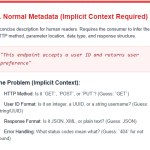
How to Create AI-ready APIs?

Postman has introduced a comprehensive checklist and developer guide aimed at creating AI-ready APIs, emphasizing that the quality of data fed into AI models depends heavily on the reliability and clarity of the APIs. The guide underscores the importance of designing APIs that are predictable, machine-readable, and consistent, enabling AI agents to interpret and utilize data effectively without ambiguity or manual intervention. This involves adopting standardized patterns, maintaining synchronized, automatically generated documentation, and providing explicit, machine-readable metadataincluding detailed request schemas, parameter definitions, and response structuresto facilitate seamless integration with AI systems. As AI-driven agents increasingly handle tasks such as purchasing

Business
📄 MarkTechPost

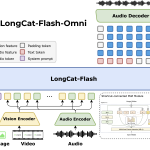
LongCat-Flash-Omni: A SOTA Open-Source Omni-Modal Model with 560B Parameters with 27B activated, Excelling at Real-Time Audio-Visual Interaction

Meituans LongCat team has developed LongCat Flash Omni, an open-source, omni-modal model featuring 560 billion parameters and 27 billion active per token, designed for real-time multi-modal interaction across text, images, video, and audio. Built on a shortcut-connected Mixture of Experts architecture, the model extends traditional language models by integrating perception modules such as a LongCat ViT encoder for vision and video, and an audio encoder with a dedicated Audio Codec, enabling seamless audio-visual communication and long-context understanding with a 128K token window. The architecture maintains the core language model

Research
📈 VentureBeat AI

Moving past speculation: How deterministic CPUs deliver predictable AI performance

A groundbreaking development in CPU architecture introduces a deterministic, time-based execution model that replaces traditional speculative execution, which relies on prediction and often leads to energy waste, increased complexity, and security vulnerabilities like Spectre and Meltdown. This new approach, protected by six recent U.S. patents, assigns each instruction a precise execution slot within the pipeline, creating a predictable and ordered flow that enhances efficiency and reliability by eliminating guesswork and managing latency through a simple time counter. This innovation marks a significant departure from decades of reliance on speculative execution, leveraging a latency-tolerant mechanism that improves concurrency and security while

Google AI Machine Learning
Read More
Research
📄 Towards Data Science

Graph RAG vs SQL RAG

Recent research compares Retrieval-Augmented Generation (RAG) models' performance on graph and SQL databases, highlighting their effectiveness in integrating structured data sources into natural language processing tasks. The study emphasizes the potential of RAG architectures to enhance data retrieval accuracy and contextual understanding when working with complex database schemas, paving the way for more robust AI applications in data-intensive environments.

General
📄 MarkTechPost

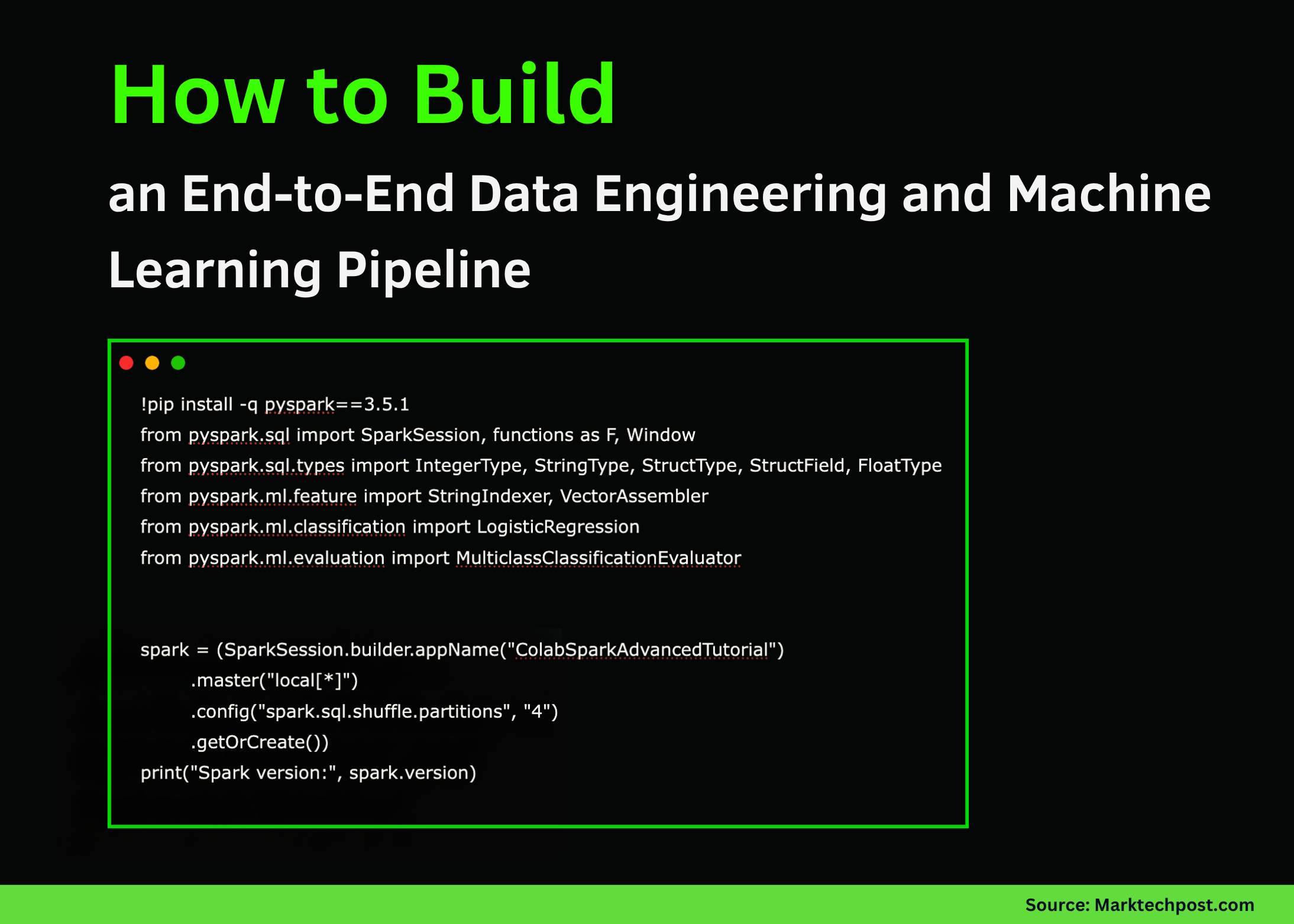
How to Build an End-to-End Data Engineering and Machine Learning Pipeline with Apache Spark and PySpark

This tutorial demonstrates how to utilize Apache Spark's capabilities through PySpark within Google Colab, enabling scalable data processing and machine learning workflows in a single-node environment. It guides users through setting up a Spark session, performing data transformations, executing SQL queries, and applying window functions, illustrating Sparks versatility for analytics tasks even without a distributed cluster. A key innovation is the integration of Sparks distributed data processing with machine learning, exemplified by building and evaluating a logistic regression model to predict user subscription types. The tutorial also covers practical aspects such as saving and reloading data in Parquet format, showcasing how

Google AI Machine Learning
Read More
Research
📈 VentureBeat AI

Large reasoning models almost certainly can think

Recent discourse surrounding large reasoning models (LRMs) has been fueled by Apple's publication "Illusion of Thinking," which argues that LRMs are incapable of genuine thought, asserting they merely perform pattern-matching rather than reasoning. This claim is challenged by the observation that even humans, who can understand algorithms like the Tower-of-Hanoi, often fail to solve complex instances, suggesting that the inability to perform certain calculations does not equate to a lack of thinking. The author contends that the absence of evidence against LRMs' capacity for thought is not proof of their incapacity, and posits that LR

Claude Deep Learning +2
Read More
Research
📄 Towards Data Science

How to Build Machine Learning Projects That Help You Get Hired

Effective machine learning projects that demonstrate practical skills and real-world applications are crucial for securing interviews and employment in the field. Focus areas include developing projects that showcase data preprocessing, model development, and deployment, such as predictive analytics, recommendation systems, and computer vision applications, which align with industry needs and demonstrate tangible impact.

Machine Learning Computer Vision
Read More
Research
📄 Towards Data Science

The Machine Learning Projects Employers Want to See

The article emphasizes the importance of showcasing practical and impactful machine learning projects that demonstrate real-world problem-solving skills to potential employers. It highlights that projects involving data analysis, predictive modeling, and deployment of machine learning modelssuch as recommendation systems, fraud detection, or natural language processingare particularly valued in job applications, as they reflect both technical proficiency and the ability to deliver tangible results.

Machine Learning NLP
Read More

Page 41 of 130 • Showing articles 481-492 of 1560