
Page 21 of 130 • 1560 Total Articles

createLiveAI

Continue exploring the latest AI breakthroughs, technology insights, and industry analysis. Page 21 of our comprehensive AI news collection.

📰 Latest Intelligence

Showing 12 articles on page 21 of 130

Live feed
Ethics
📄 AI News

Solanas high-speed AI gains and malware losses

Solana's high-speed blockchain platform is emerging as a leading environment for autonomous AI programs, leveraging its rapid processing capabilities and low transaction fees to support independent, self-executing AI agents that manage contracts and perform complex tasks without human intervention. This development underscores a significant shift toward integrating AI directly into blockchain infrastructure, enabling more efficient and autonomous decentralized applications. However, this technological advancement coincides with escalating cybersecurity threats within the cryptocurrency ecosystem, as attackers exploit the same tools that facilitate innovation. The rise of autonomous AI on Solana and similar chains introduces new security challenges, with malicious actors targeting vulnerabilities at the ledger

Autonomous Systems
Read More
Ethics
📄 MarkTechPost

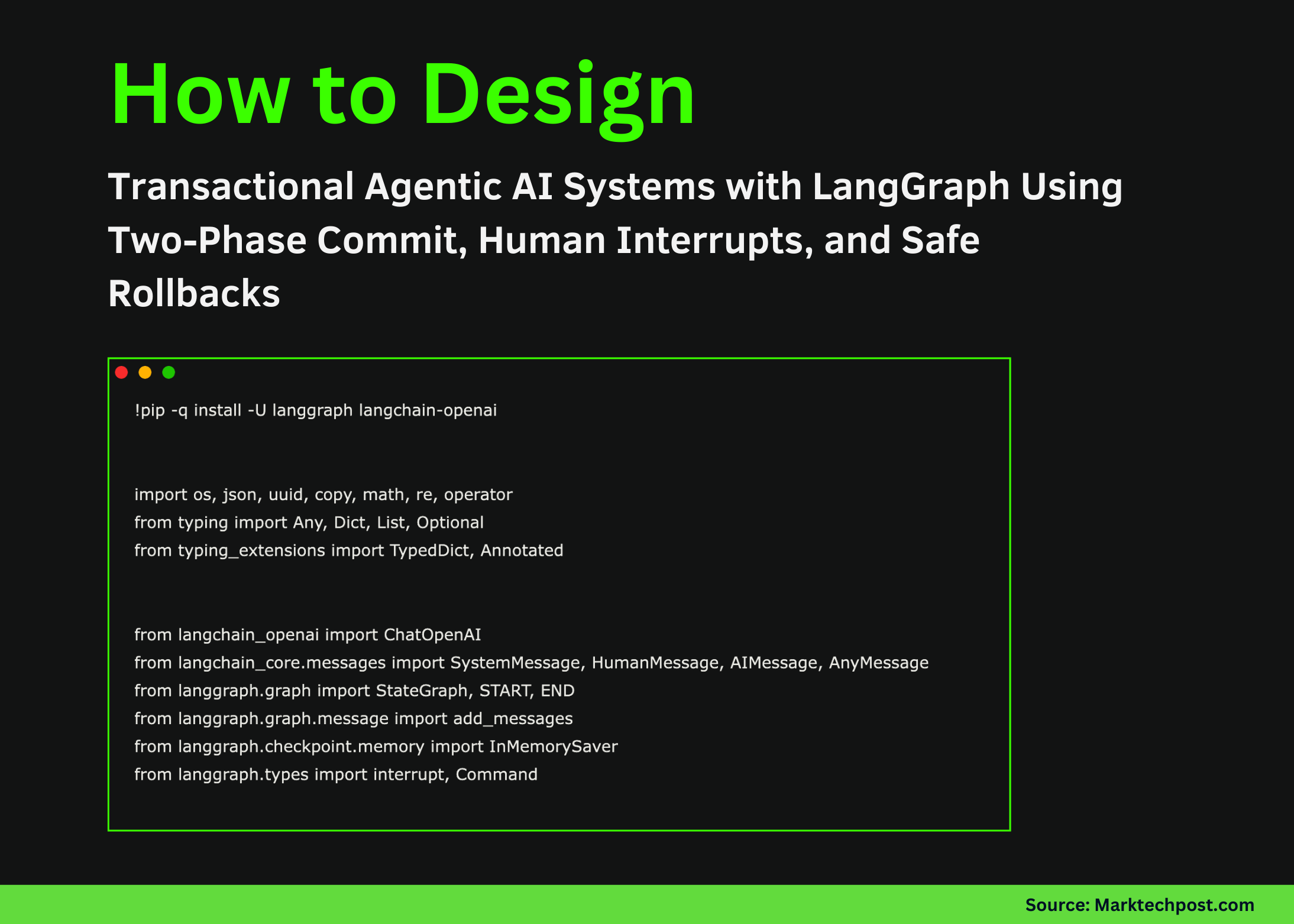
How to Design Transactional Agentic AI Systems with LangGraph Using Two-Phase Commit, Human Interrupts, and Safe Rollbacks

A recent development in AI system design involves implementing an agentic architecture using LangGraph that models reasoning and action as a transactional workflow, rather than a single decision. This approach employs a two-phase commit system where the agent stages reversible changes, verifies strict invariants, and pauses for human approval via graph interrupts before committing or rolling back actions, enhancing safety, auditability, and controllability. This methodology advances the creation of governance-aware AI workflows that prioritize safety and reliability, moving beyond reactive chatbots to structured systems capable of human oversight. Demonstrated within Google Colab using OpenAI models, this framework enables

GPT Google AI
Read More
Technology
📄 Towards AI Newsletter

Our holiday gift for builders disappears at the new year.

The article highlights the release of two comprehensive coursesLLM Systems Foundations and AI Engineeringthat together equip learners with the essential decision frameworks, technical knowledge, and practical skills needed to develop and deploy reliable, scalable, and governable large language model (LLM) systems. LLM Systems Foundations focuses on understanding the core principles, system design, and failure modes of production LLMs, enabling practitioners to make informed decisions on retrieval, evaluation, and workflow orchestration before coding, while AI Engineering guides the transition from design to deployment, emphasizing the importance of building stable, cost-effective, and compliant systems.

Research
📄 Towards Data Science

Chunk Size as an Experimental Variable in RAG Systems

Researchers have explored the impact of chunk size on retrieval-augmented generation (RAG) systems by systematically experimenting with varying chunk sizes during the retrieval process. Their findings highlight that adjusting chunk size significantly influences the quality and relevance of retrieved information, thereby affecting the overall performance of RAG models. This study underscores the importance of optimizing data segmentation strategies to enhance the effectiveness of retrieval-based language models.

Research
📄 Towards Data Science

The Machine Learning Advent Calendar Bonus 2: Gradient Descent Variants in Excel

Gradient Descent, along with its variants Momentum, RMSProp, and Adam, share the same optimization goal of reaching the minimum of a loss function, but they differ in their approaches to navigating the parameter space. Each successive method introduces mechanisms to address limitations of the previous algorithmssuch as improving convergence speed, stability, or adaptivenessresulting in more efficient and smarter updates during training. These enhancements do not alter the ultimate target but optimize the path taken to reach it, making the training process more robust and effective. The evolution from basic Gradient Descent to Adam exemplifies how incremental improvements in optimization

Machine Learning
Read More
Research
📄 Towards Data Science

The Machine Learning Advent Calendar Bonus 1: AUC in Excel

The article highlights the use of the Area Under the Curve (AUC) metric to evaluate the performance of classification models, emphasizing its ability to measure how effectively a model ranks positive instances higher than negative ones regardless of threshold selection. It also discusses practical implementation, demonstrating how AUC can be calculated within Excel, making this evaluation accessible for data scientists and analysts without specialized software.

Machine Learning
Read More
Ethics
📄 The Hacker News

How to Integrate AI into Modern SOC Workflows

AI is rapidly being integrated into security operations centers (SOCs), but many organizations face challenges in translating initial experimentation into sustained operational value due to a lack of strategic integration. Instead of being used as a tool for process enhancement, some teams misuse AI as a shortcut for fixing underlying issues or apply machine learning techniques without aligning them with existing security workflows, highlighting the need for a more deliberate and structured approach to AI deployment in cybersecurity.

Machine Learning
Read More
Research
📄 MarkTechPost

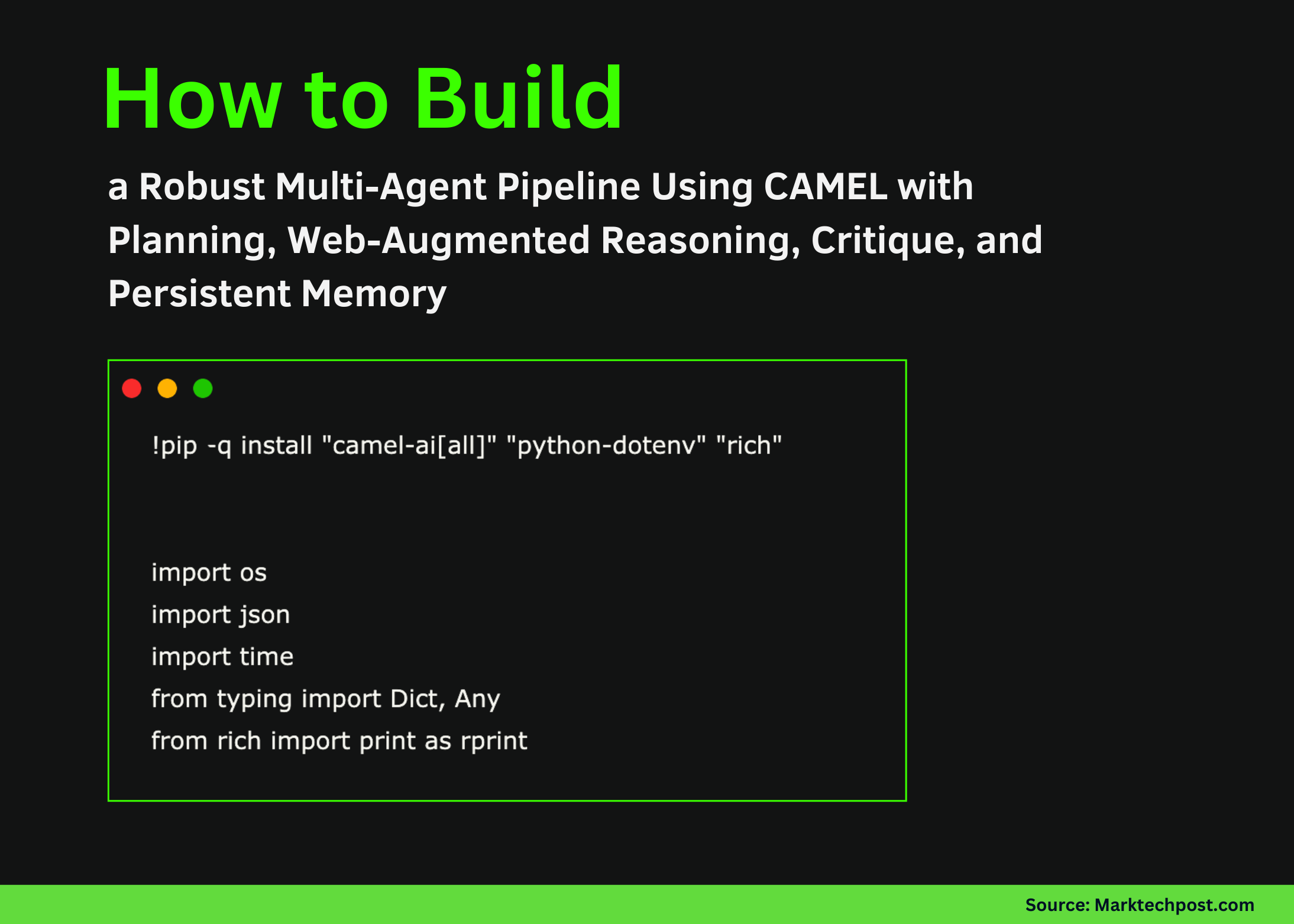
How to Build a Robust Multi-Agent Pipeline Using CAMEL with Planning, Web-Augmented Reasoning, Critique, and Persistent Memory

The article introduces the CAMEL framework, an innovative multi-agent system designed to automate complex research workflows by coordinating specialized agents such as Planner, Researcher, Writer, Critic, and Finalizer. This setup enables the transformation of high-level topics into comprehensive, evidence-based research briefs through structured interactions, JSON-based contracts, and iterative refinement, enhancing reliability, control, and scalability in AI-driven research processes. Key technical advancements include the secure integration of the OpenAI API, programmatic orchestration of agent interactions, and the implementation of lightweight persistent memory to retain knowledge across multiple runs. These features facilitate continuous learning

Research
📄 Towards Data Science

Machine Learning vs AI Engineer: What Are the Differences?

The article clarifies the distinctions between AI engineers and machine learning engineers, emphasizing that while both roles command six-figure salaries, their skill sets and focus areas differ significantly. AI engineers typically work on integrating various AI components into broader systems, requiring expertise in software engineering, deployment, and AI frameworks, whereas machine learning engineers concentrate on developing and optimizing machine learning models, often with a stronger emphasis on data science and algorithmic proficiency. Understanding these differences is crucial for professionals to align their skill development with career goals and to avoid investing time in learning skills that may not align with their desired role. The article highlights

Machine Learning
Read More

Page 21 of 130 • Showing articles 241-252 of 1560