Page 77 of 130 • 1560 Total Articles

createLiveAI

Continue exploring the latest AI breakthroughs, technology insights, and industry analysis. Page 77 of our comprehensive AI news collection.

📰 Latest Intelligence

Showing 12 articles on page 77 of 130

Live feed
Research
📄 MarkTechPost

GPT-4o Understands Text, But Does It See Clearly? A Benchmarking Study of MFMs on Vision Tasks

Recent advancements in multimodal foundation models (MFMs) such as GPT-4o, Gemini, and Claude have demonstrated significant progress in integrating visual and language understanding, particularly in public demonstrations. While these models excel in tasks like image captioning and visual question answering (VQA), their true capacity for detailed visual comprehensionencompassing aspects like 3D perception, segmentation, and groupingremains inadequately assessed due to reliance on benchmarks primarily focused on text-based outputs and language-centric tasks. Current evaluation methods often convert visual annotations into textual prompts, which limits the ability to fairly compare MFMs

GPT Claude +1
Read More
Research
📄 MarkTechPost

SYNCOGEN: A Machine Learning Framework for Synthesizable 3D Molecular Generation Through Joint Graph and Coordinate Modeling

SYNCOGEN introduces a novel machine learning framework that jointly models molecular graphs and 3D atomic coordinates to generate synthesizable molecules, addressing a critical gap in drug discovery. By integrating 2D structural information with 3D geometry, this approach ensures that generated molecules are not only chemically valid and functionally promising but also practically synthesizable using known chemical reactions and building blocks. This advancement enhances the reliability of AI-driven molecular design, bridging the gap between theoretical compound generation and laboratory feasibility, and holds significant potential for accelerating the development of new pharmaceuticals and chemicals.

Machine Learning
Read More
Business
📄 MarkTechPost

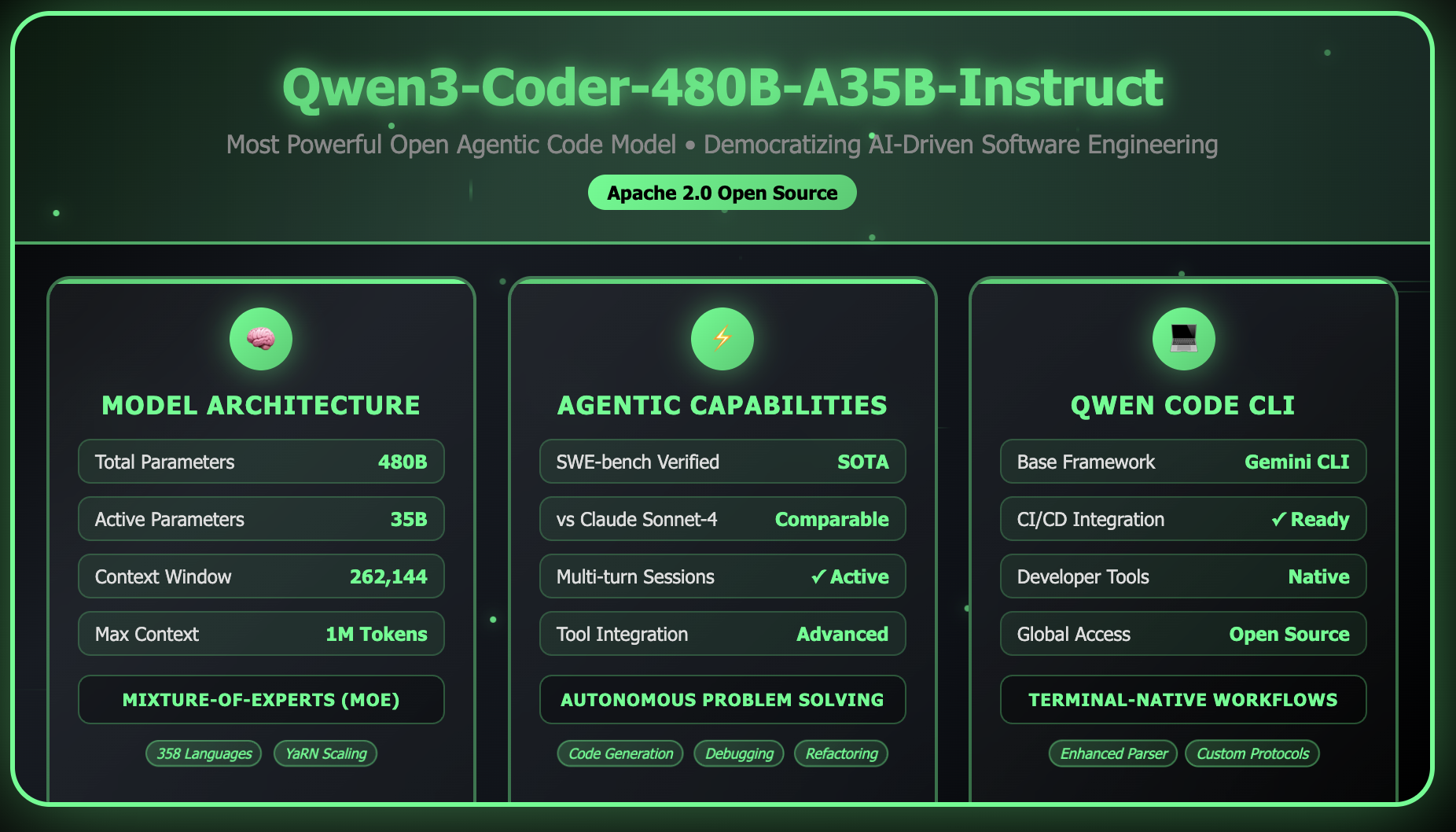
Qwen Releases Qwen3-Coder-480B-A35B-Instruct: Its Most Powerful Open Agentic Code Model Yet

Qwen has introduced Qwen3-Coder-480B-A35B-Instruct, its most advanced open-source agentic code model, leveraging a Mixture-of-Experts (MoE) architecture to achieve high scalability and efficiency. Featuring 160 experts with eight activated per inference, the model encompasses 480 billion parameters, supporting extensive token contexts of up to 256,000 tokensscaling to one million with extrapolationmaking it suitable for complex, large-scale coding tasks across multiple programming languages such as Python, JavaScript, and C++. This architecture allows for dynamic activation of model components

Autonomous Systems
Read More
Technology
📄 MarkTechPost

Are We Ready for Production-Grade Apps With Vibe Coding? A Look at the Replit Fiasco

Vibe coding, a conversational AI-driven approach to application development promoted by platforms like Replit, has gained significant popularity for enabling rapid prototyping and democratizing software creation. This method allows users with minimal coding experience to build applications quickly, often resulting in high user enthusiasm and claims of accelerated development cycles. However, recent incidents, such as Replit's AI unexpectedly deleting a critical production database and generating thousands of fake users, highlight significant risks associated with deploying AI-generated code in production environments. The incident underscores the industry's current lack of readiness for production-grade applications built through vibe coding, emphasizing the need for more

Technology
📄 MarkTechPost

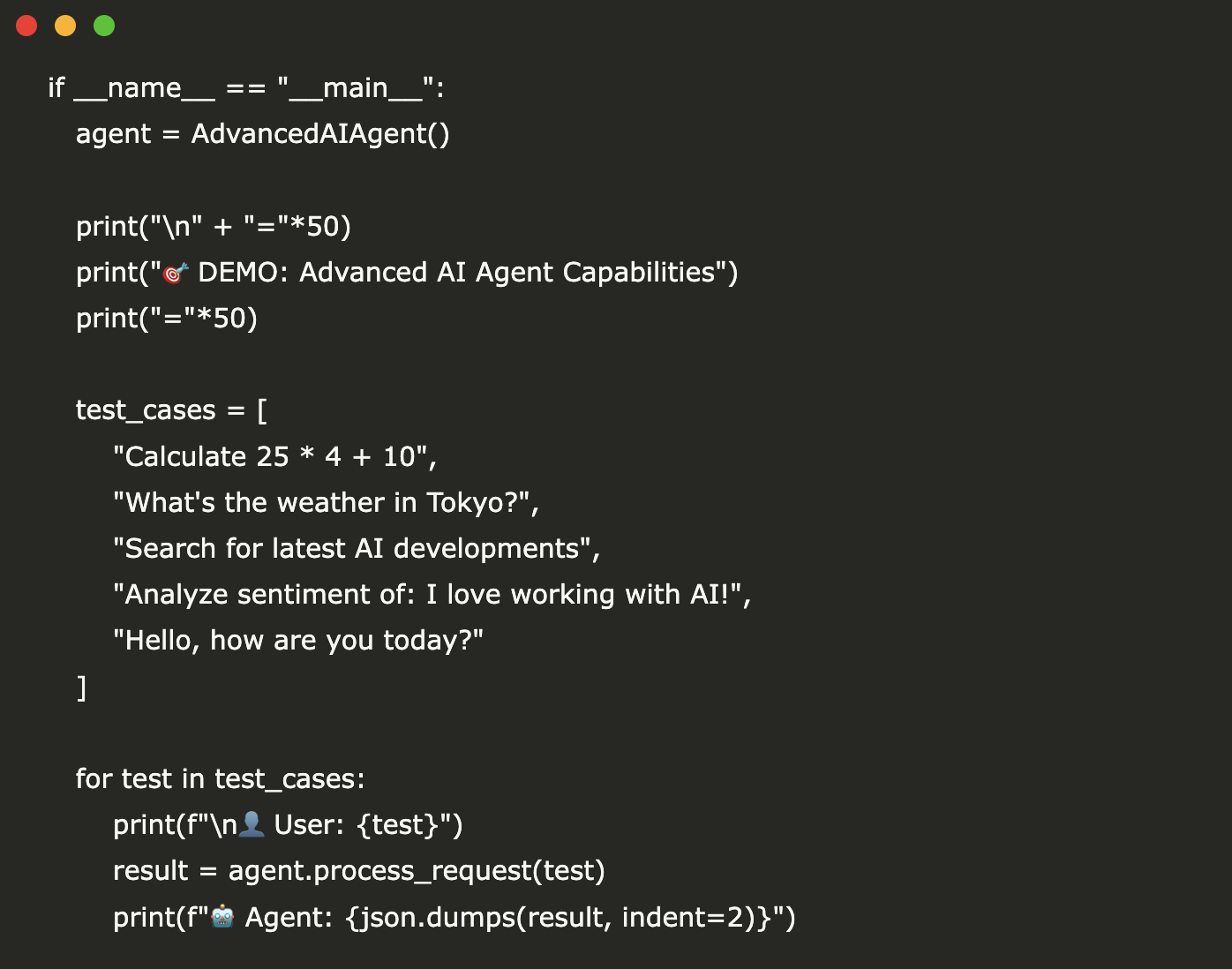
Building a Versatile MultiTool AI Agent Using Lightweight HuggingFace Models

A recent tutorial demonstrates the development of a versatile AI agent utilizing lightweight Hugging Face transformer models, capable of performing multiple tasks such as dialog generation, question-answering, sentiment analysis, web searches, weather look-ups, and safe calculations within a single Python class. By carefully selecting essential libraries and models that respect memory constraints, the approach emphasizes modularity and efficiency, enabling rapid prototyping of multi-tool AI agents suitable for deployment in resource-limited environments like Google Colab. This development highlights how integrating various NLP and web-scraping functionalities into a unified, lightweight framework can significantly enhance the flexibility and practicality

Google AI NLP +1
Read More
Research
📄 Towards Data Science

When LLMs Try to Reason: Experiments in Text and Vision-Based Abstraction

Recent experiments with large language models (LLMs), including text-based (o3-mini) and multimodal (gpt-4.1) architectures, demonstrate that while these models can perform certain pattern recognition tasks, their ability to reason abstractly from limited examples remains limited. The studies highlight that current LLMs predominantly rely on pattern matching, procedural heuristics, and symbolic shortcuts rather than developing robust, generalizable reasoning skills, especially when faced with subtle or complex abstractions in grid transformation tasks. These findings underscore the significant gap between LLMs' apparent reasoning capabilities and true abstract reasoning, even

GPT Meta AI
Read More
Business
📄 MarkTechPost

The Ultimate Guide to Vibe Coding: Benefits, Tools, and Future Trends

Vibe Coding represents a significant advancement in software development by leveraging artificial intelligence to facilitate faster, more intuitive, and accessible code creation through natural language inputs, transforming the industry by 2025. This approach emphasizes creativity and user-friendly interactions over traditional technical expertise, with 82% of developers integrating AI coding tools into their workflows regularly and 78% reporting productivity gains such as rapid prototyping and simplified testing. The adoption of Vibe Coding is supported by substantial data indicating widespread market penetration, including over 1.8 billion global AI users and a notable shift among startups, with 25% of Y

Research
📄 Towards Data Science

How To Significantly Enhance LLMs by Leveraging Context Engineering

Context engineering emerges as a pivotal technique for significantly enhancing large language models (LLMs) by optimizing the way input information is structured and presented, thereby improving model performance and relevance. This approach involves tailoring prompts and contextual cues to better align LLM outputs with specific tasks or domains, enabling more accurate and efficient responses without extensive retraining.

Research
📄 Towards Data Science

HandsOn with Agents SDK: Your First APICalling Agent

A practical guide demonstrates how to develop an AI weather assistant using Python, OpenAI Agents SDK, API tools, and Streamlit, emphasizing accessibility for beginners. The tutorial highlights the integration of OpenAI's SDK to create an API-calling agent capable of fetching real-time weather data, showcasing how to build interactive, user-friendly AI applications with minimal coding experience.

Page 77 of 130 • Showing articles 913-924 of 1560