Page 75 of 130 • 1560 Total Articles

createLiveAI

Continue exploring the latest AI breakthroughs, technology insights, and industry analysis. Page 75 of our comprehensive AI news collection.

📰 Latest Intelligence

Showing 12 articles on page 75 of 130

Live feed
Research
📄 Towards Data Science

The Stanford Framework That Turns AI into Your PM Superpower

The article introduces a human-centric framework developed at Stanford that enables product managers to leverage AI automation as a strategic advantage, transforming AI into a "superpower" for product development. This approach emphasizes aligning AI tools with human decision-making processes, enhancing efficiency, creativity, and strategic insight in product management workflows. By integrating this framework, product managers can better harness AI's capabilities to streamline tasks, improve user experience, and drive innovation in their projects.

Research
📄 Towards Data Science

Talk to myAgent

The article introduces a novel approach to developing conversation-driven APIs for large language models (LLMs), emphasizing the importance of creating more interactive and user-centric interfaces. This innovation aims to enhance the usability and flexibility of LLMs by enabling more natural, context-aware interactions, thereby expanding their application scope across various domains.

Research
📄 MarkTechPost

Building a Context-Aware Multi-Agent AI System Using Nomic Embeddings and Gemini LLM

A recent tutorial demonstrates the development of a sophisticated multi-agent AI system leveraging Nomic Embeddings and Google's Gemini large language model (LLM). This architecture integrates semantic memory, contextual reasoning, and multi-agent orchestration, enabling agents to store, retrieve, and process information through natural language queries, thereby enhancing their analytical and conversational capabilities. By utilizing tools such as LangChain, Faiss, and LangChain-Nomic, the system exemplifies a modular and extensible framework that supports complex reasoning and dynamic information management. This development signifies a notable advancement in building context-aware AI agents capable of sophisticated interactions, research

Google AI NLP
Read More
Ethics
📄 MarkTechPost

Why Context Matters: Transforming AI Model Evaluation with Contextualized Queries

Recent advancements highlight the importance of incorporating contextualized queries into AI model evaluation to better understand user intent and improve response relevance. Traditional assessment methods often overlook critical contextual information, leading to inconsistent or potentially harmful outputs, especially when responses are not tailored to individual user backgrounds or preferences. To address this, researchers are exploring techniques such as generating clarification questions, personalizing responses based on user attributes, and developing more nuanced evaluation frameworks that consider context, thereby enhancing the accuracy and safety of AI-generated content.

General
📄 MarkTechPost

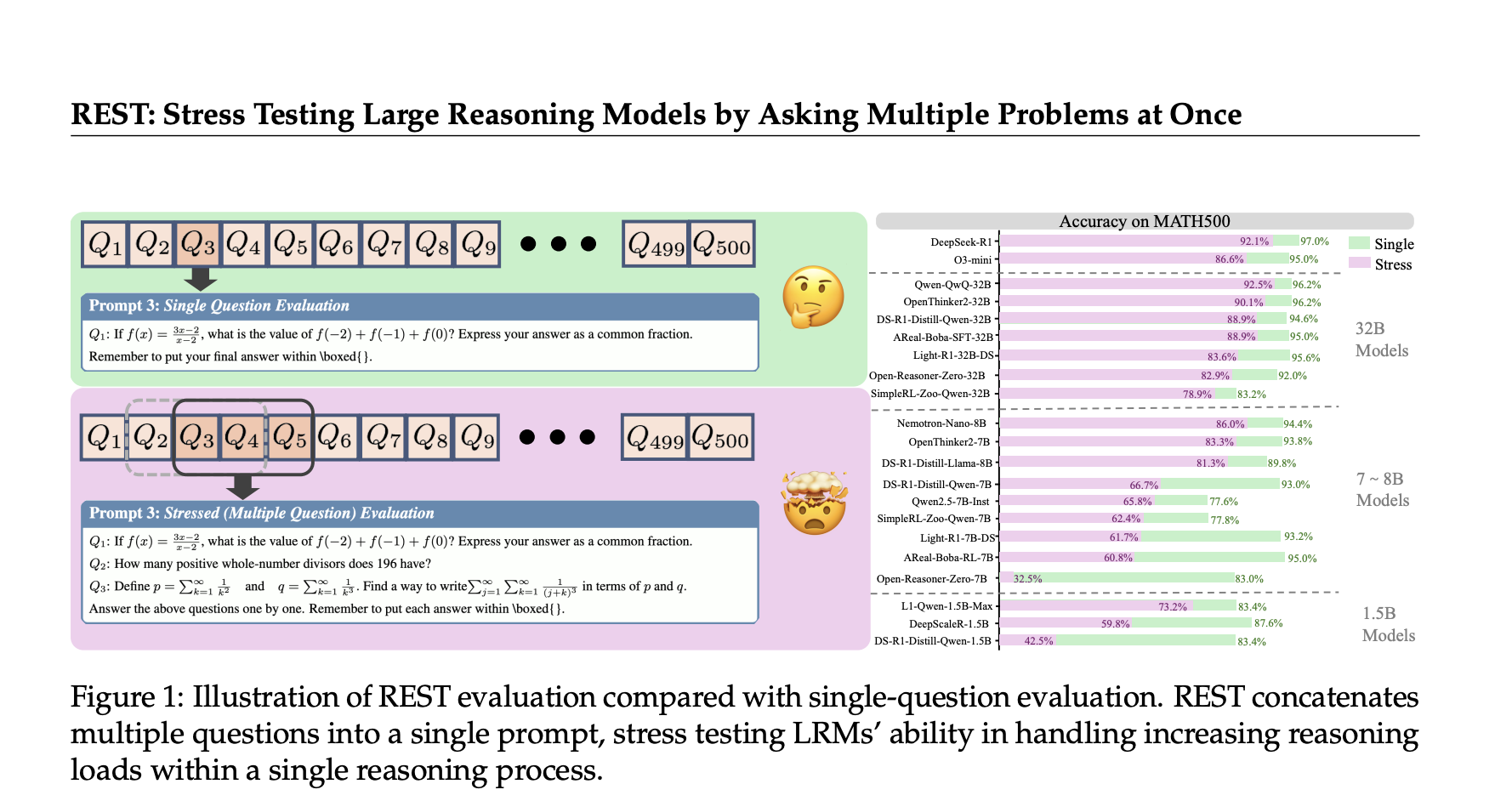
REST: A Stress-Testing Framework for Evaluating Multi-Problem Reasoning in Large Reasoning Models

The development of REST (Reasoning Evaluation through Simultaneous Testing) introduces a significant advancement in the assessment of Large Reasoning Models (LRMs) by shifting from traditional single-question benchmarks to a multi-problem stress-testing framework. This approach aims to better evaluate LRMs' multi-context reasoning abilities, which are more representative of real-world problem-solving scenarios, addressing limitations of existing benchmarks like GSM8K and MATH that focus on isolated questions and lead to saturated performance scores. By challenging LRMs with simultaneous, multi-problem tasks, REST enhances the discriminative power of evaluations, enabling more accurate differentiation

Research
📄 Towards Data Science

Declarative and Imperative Prompt Engineering for Generative AI

The article introduces a framework distinguishing between declarative and imperative prompt engineering techniques for generative AI, emphasizing their roles in optimizing model outputs. Declarative prompts specify desired outcomes through high-level descriptions, while imperative prompts involve explicit, step-by-step instructions, enabling more precise control over generative processes. This differentiation enhances the ability to tailor AI responses effectively, offering practical insights into designing prompts that improve accuracy, relevance, and reliability in applications across various domains.

Page 75 of 130 • Showing articles 889-900 of 1560