

Page 63 of 130 • 1560 Total Articles

createLiveAI

Continue exploring the latest AI breakthroughs, technology insights, and industry analysis. Page 63 of our comprehensive AI news collection.

📰 Latest Intelligence

Showing 12 articles on page 63 of 130

Live feed
Research
📄 Towards Data Science

Why Science Must Embrace Co-Creation with Generative AI to Break Current Research Barriers

An open letter advocates for the scientific community to embrace co-creation with generative AI tools to overcome existing research barriers, emphasizing that AI can significantly accelerate discovery and innovation. By integrating generative AI into research workflows, scientists can enhance hypothesis generation, data analysis, and experimental design, fostering a more collaborative and efficient scientific process.

Research
📄 MarkTechPost

SEA-LION v4: Multimodal Language Modeling for Southeast Asia

AI Singapore (AISG), in collaboration with Google, has launched SEA-LION v4, an open-source multimodal language model based on the Gemma 3 (27B) architecture, specifically optimized for Southeast Asian languages. The model supports both text and image understanding, targeting languages with limited digital resources, and is licensed for commercial use, facilitating deployment on standard hardware platforms. Benchmark evaluations on the SEA-HELM suite demonstrate SEA-LION v4s state-of-the-art performance across multiple Southeast Asian languages, including Filipino, Malay, Tamil, Burmese, Thai, and Vietnamese. Notably

Google AI
Read More
Ethics
📄 MarkTechPost

How to Implement the LLM Arena-as-a-Judge Approach to Evaluate Large Language Model Outputs

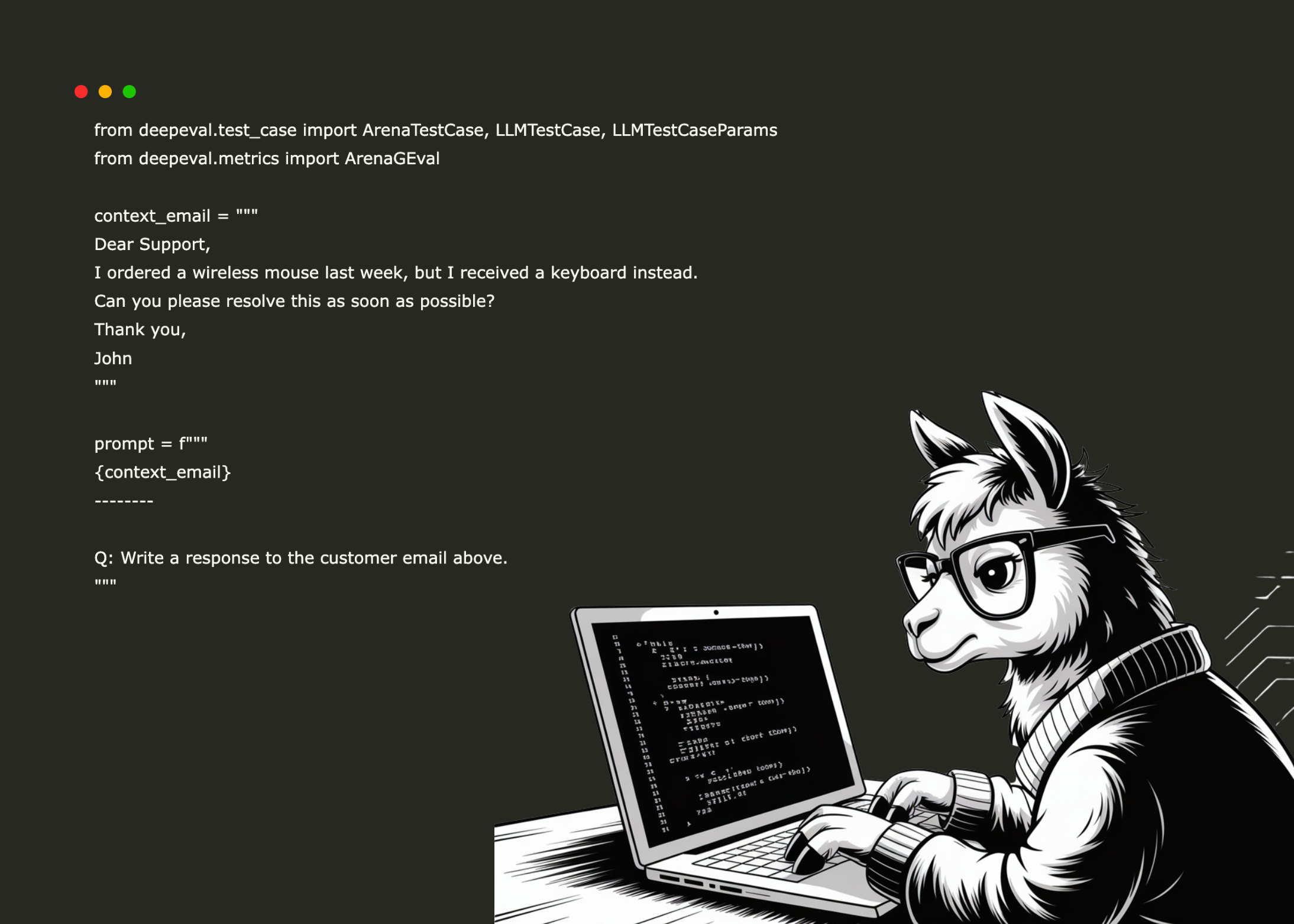
The article introduces the LLM Arena-as-a-Judge approach, a novel evaluation method for large language model outputs that compares responses head-to-head rather than assigning isolated scores, allowing for more nuanced assessments based on criteria like helpfulness and clarity. This technique leverages multiple AI models, such as GPT-4.1, Gemini 2.5 Pro, and GPT-5, to generate and evaluate responses in a practical email support scenario, demonstrating its potential to improve the accuracy and fairness of LLM output evaluation.

GPT Google AI
Read More
Research
📄 MarkTechPost

A Full Code Implementation to Design a Graph-Structured AI Agent with Gemini for Task Planning, Retrieval, Computation, and Self-Critique

A recent tutorial demonstrates the development of a sophisticated graph-based AI agent utilizing the GraphAgent framework integrated with the Gemini 1.5 Flash model. This system employs a directed graph architecture where individual nodes perform specialized functions such as task planning, flow control, external research, mathematical computation, answer synthesis, and output validation, enabling modular reasoning, retrieval, and self-critique within a unified pipeline. The implementation leverages structured JSON prompts via a Gemini wrapper and incorporates local Python tools for safe math evaluation and document search, facilitating end-to-end execution of complex reasoning tasks. This approach exemplifies how combining graph

Google AI
Read More
Technology
📄 MarkTechPost

GPZ: A Next-Generation GPU-Accelerated Lossy Compressor for Large-Scale Particle Data

Researchers from multiple institutions have developed GPZ, a GPU-accelerated, error-bounded lossy compressor designed to efficiently reduce the size of large-scale particle and point-cloud datasets. This innovative tool significantly enhances data throughput, compression ratios, and fidelity, outperforming five leading existing solutions, thereby addressing the critical challenge of managing the explosive growth of scientific and commercial data generated by particle-based simulations and applications. The core technical advancement lies in GPZs ability to handle the irregular, low-redundancy nature of particle datacharacterized by vast, multidimensional point cloudswithout bottlenecking modern

General
📄 MarkTechPost

Prefix-RFT: A Unified Machine Learning Framework to blend Supervised Fine-Tuning (SFT) and Reinforcement Fine-Tuning (RFT)

A recent development in large language model (LLM) training introduces Prefix-RFT, a unified machine learning framework that combines supervised fine-tuning (SFT) and reinforcement fine-tuning (RFT) to leverage the strengths of both methods. While SFT effectively teaches instruction-following through example-based learning, it often results in rigid behavior and limited generalization, whereas RFT optimizes models for task success via reward signals but can introduce instability. Prefix-RFT aims to integrate these approaches, enabling models to benefit from structured instruction while dynamically adapting to task-specific rewards, thus enhancing both flexibility and performance

Machine Learning
Read More
Technology
📄 MarkTechPost

What is a Voice Agent in AI? Top 9 Voice Agent Platforms to Know (2025)

AI voice agents represent a significant advancement over traditional IVR systems by enabling dynamic, two-way conversations through real-time speech recognition, natural language understanding, and speech synthesis. These systems leverage sophisticated components such as Automatic Speech Recognition (ASR) with low latency (~200-300 ms), large language models (LLMs) for dialog management, and advanced Text-to-Speech (TTS) technology capable of producing emotionally nuanced, natural-sounding responses within approximately 250 ms, facilitating seamless interactions. The integration of these components with telephony infrastructureincluding PSTN, VoIP, and contact center platformsallows

Research
📄 Towards Data Science

Is Googles Reveal of Geminis Impact Progress or Greenwashing?

Google's recent disclosures about its Gemini AI model suggest incremental progress, but closer examination raises questions about the true impact and transparency of these advancements. While the company reports modest performance metrics, critics argue that the presentation may obscure underlying challenges or overstate the model's capabilities, prompting ongoing debate over whether these disclosures reflect genuine innovation or potential greenwashing.

Google AI
Read More
Ethics
📄 AI News

Rachel James, AbbVie: Harnessing AI for corporate cybersecurity

AbbVie's cybersecurity team, led by Principal AI/ML Threat Intelligence Engineer Rachel James, is leveraging large language models (LLMs) and AI-driven threat intelligence platforms like OpenCTI to enhance threat detection and gap analysis. By analyzing vast amounts of security alerts, the team uses LLMs to identify patterns, duplicates, and vulnerabilities more efficiently, enabling proactive defense measures before attackers can exploit weaknesses. This approach exemplifies how AI, particularly LLMs and structured threat intelligence frameworks like STIX, is transforming cybersecurity from reactive to predictive, allowing organizations to synthesize unstructured data into actionable insights

Machine Learning
Read More
Research
📄 MarkTechPost

Top 10 AI Blogs and News Websites for AI Developers and Engineers in 2025

The OpenAI Blog remains a pivotal resource for AI developers, offering detailed insights into the latest advancements in large language models, AI safety, and deployment strategies, thereby shaping the future trajectory of AI research and application. Complementing this, the NVIDIA Developer Blog emphasizes GPU-accelerated AI, providing technical guidance on optimizing deep learning workflows through CUDA programming, performance benchmarks, and hardware architecture analysis, which are crucial for maximizing computational efficiency. Together, these platforms highlight the ongoing focus on both innovative model development and hardware optimization, reflecting the industrys dual priorities of advancing AI capabilities while ensuring scalable, high-performance deployment.

GPT NVIDIA +1
Read More

Page 63 of 130 • Showing articles 745-756 of 1560