Page 53 of 130 • 1560 Total Articles

createLiveAI

Continue exploring the latest AI breakthroughs, technology insights, and industry analysis. Page 53 of our comprehensive AI news collection.

📰 Latest Intelligence

Showing 12 articles on page 53 of 130

Live feed
Ethics
📄 The Hacker News

Two Critical Flaws Uncovered in Wondershare RepairIt Exposing User Data and AI Models

Cybersecurity researchers from Trend Micro have identified two critical vulnerabilities in Wondershare RepairIt, with CVE-2025-10643 being a high-severity authentication bypass flaw (CVSS score: 9.1). These vulnerabilities not only exposed private user data but also posed significant risks of AI model tampering and supply chain attacks, highlighting serious security concerns in the software's architecture.

Research
🎓 MIT Tech Review AI

Its surprisingly easy to stumble into a relationship with an AI chatbot

Researchers from MIT conducted the first large-scale computational analysis of the Reddit community r/MyBoyfriendIsAI, revealing that many users unintentionally form emotional relationships with general-purpose AI chatbots like ChatGPT while seeking assistance for other tasks. This study highlights how the advanced emotional intelligence of large language models can lead users to develop unexpected bonds, even when neither party initially intends to create a romantic connection.

GPT Academic
Read More
Ethics
📄 AI News

Governing the age of agentic AI: Balancing autonomy and accountability

Agentic AI represents a significant advancement beyond traditional automation, enabling autonomous systems that can adapt, connect with other systems, and influence critical business decisions in real time. This evolution promises substantial value, such as proactive customer issue resolution and dynamic application adjustments, but also introduces new risks related to autonomy, ethical considerations, and regulatory compliance. To mitigate these challenges, governance frameworks and transparency are essential, with low-code platforms emerging as a key solution by integrating oversight, governance, and compliance directly into the development process, thereby ensuring that autonomous AI systems align with strategic objectives while managing potential risks.

Autonomous Systems
Read More
Ethics
📄 MarkTechPost

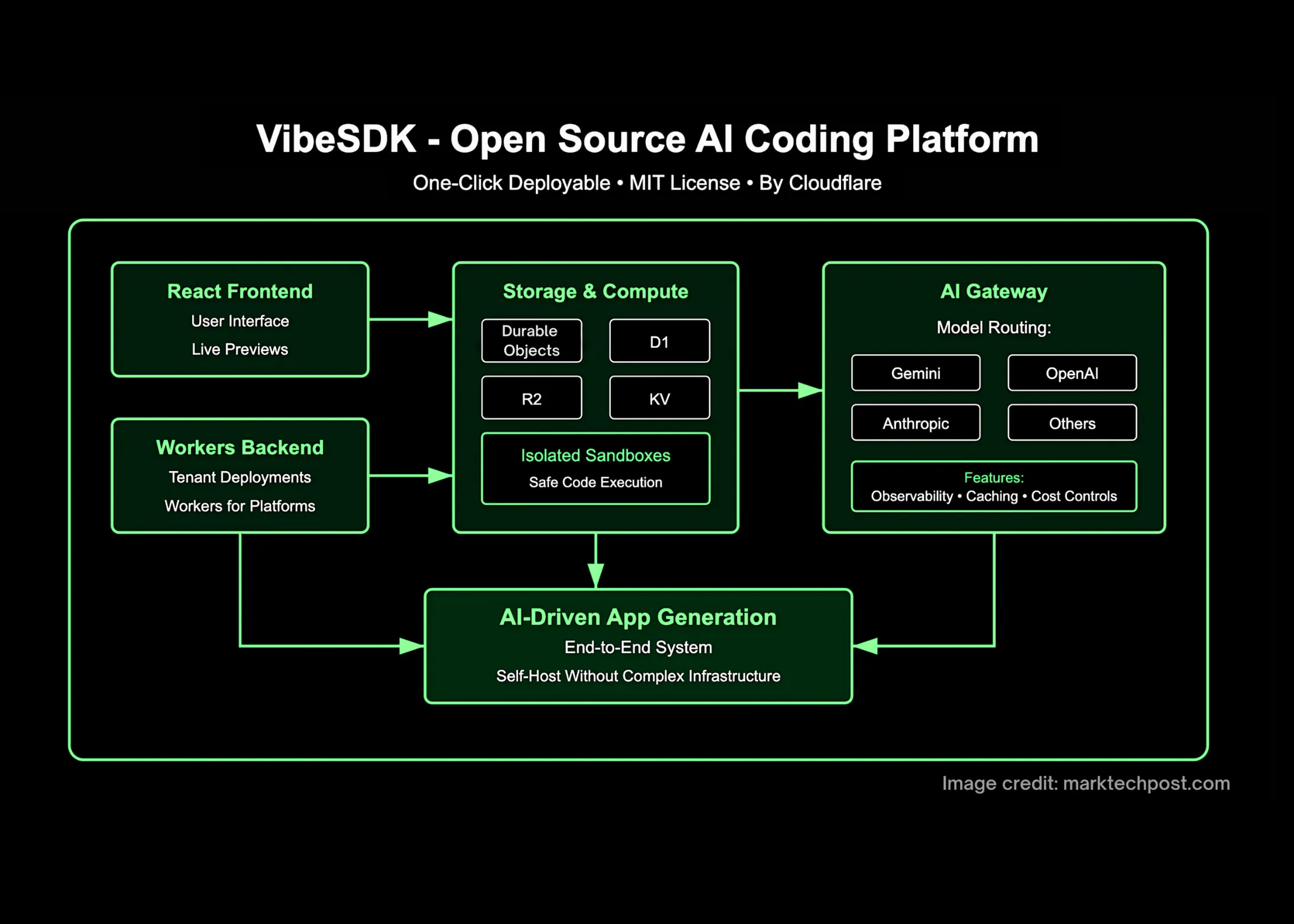
CloudFlare AI Team Just Open-Sourced VibeSDK that Lets Anyone Build and Deploy a Full AI Vibe Coding Platform with a Single Click

CloudFlare's AI team has open-sourced VibeSDK, a comprehensive full-stack platform designed for "vibe coding" that enables users to rapidly build and deploy AI-powered applications with a single click. The platform integrates code generation, safe execution environments, live previews, and multi-tenant deployment capabilities, allowing teams to create internal or customer-facing AI app builders without complex infrastructure setup. VibeSDK leverages Cloudflare's serverless ecosystem, including Workers, Durable Objects, R2, and KV storage, to facilitate seamless app development, testing, and deployment within isolated sandboxes, ensuring security

Research
📄 Towards Data Science

Generating Consistent Imagery with Gemini

The article introduces Gemini, a prompt-based image generation pipeline designed to produce consistent and high-quality imagery for large image libraries. By leveraging advanced prompt engineering and integration techniques, Gemini enables users to systematically generate, curate, and maintain visual content with improved coherence and efficiency, addressing key challenges in scalable image synthesis.

Google AI
Read More
Research
📄 Towards Data Science

Generative AI Myths, Busted: An Engineers Quick Guide

Generative AI operates by leveraging large language models trained on vast datasets to produce human-like text, images, or other content, often through techniques such as transformer architectures and probabilistic modeling. Despite widespread misconceptions, experts emphasize that generative AI lacks true understanding and creativity, making it unlikely to replace engineers, but rather serve as a tool to augment their work.

Transformers
Read More
Research
📄 Towards Data Science

Generative AI Myths, Busted: An Engineerss Quick Guide

Generative AI operates by leveraging large language models trained on vast datasets to produce human-like text, images, or other content, often through techniques such as transformer architectures and probabilistic modeling. Despite widespread misconceptions, experts emphasize that generative AI lacks true understanding and creativity, making it unlikely to replace engineers or other professionals in the near future, as it primarily functions as a tool to augment human expertise rather than substitute it.

Transformers
Read More
Business
📄 AI News

Martin Frederik, Snowflake: Data quality is key to AI-driven growth

The key innovation highlighted by Martin Frederik of Snowflake emphasizes that the success of AI initiatives fundamentally depends on high-quality, well-governed data infrastructure. Without a robust data strategy, even advanced AI models and applications are unlikely to translate from proof-of-concept to revenue-generating tools, as poor data quality hampers their effectiveness. Frederik underscores that AI should be viewed as a means to achieve specific business objectives rather than an end in itself. He points out that many projects stall due to misalignment with business needs, lack of cross-team communication, and data disorganization, suggesting that organizations must

Research
📄 Towards Data Science

5 Techniques to Prevent Hallucinations in Your RAG Question Answering

The article discusses five techniques to mitigate hallucinations in Retrieval-Augmented Generation (RAG) question-answering systems, which are instances where AI models generate inaccurate or fabricated information. These methods aim to enhance the reliability and factual accuracy of AI responses by improving retrieval accuracy, refining prompt design, and implementing validation mechanisms, thereby reducing the adverse impact of hallucinations on user trust and system performance.

General
📄 MarkTechPost

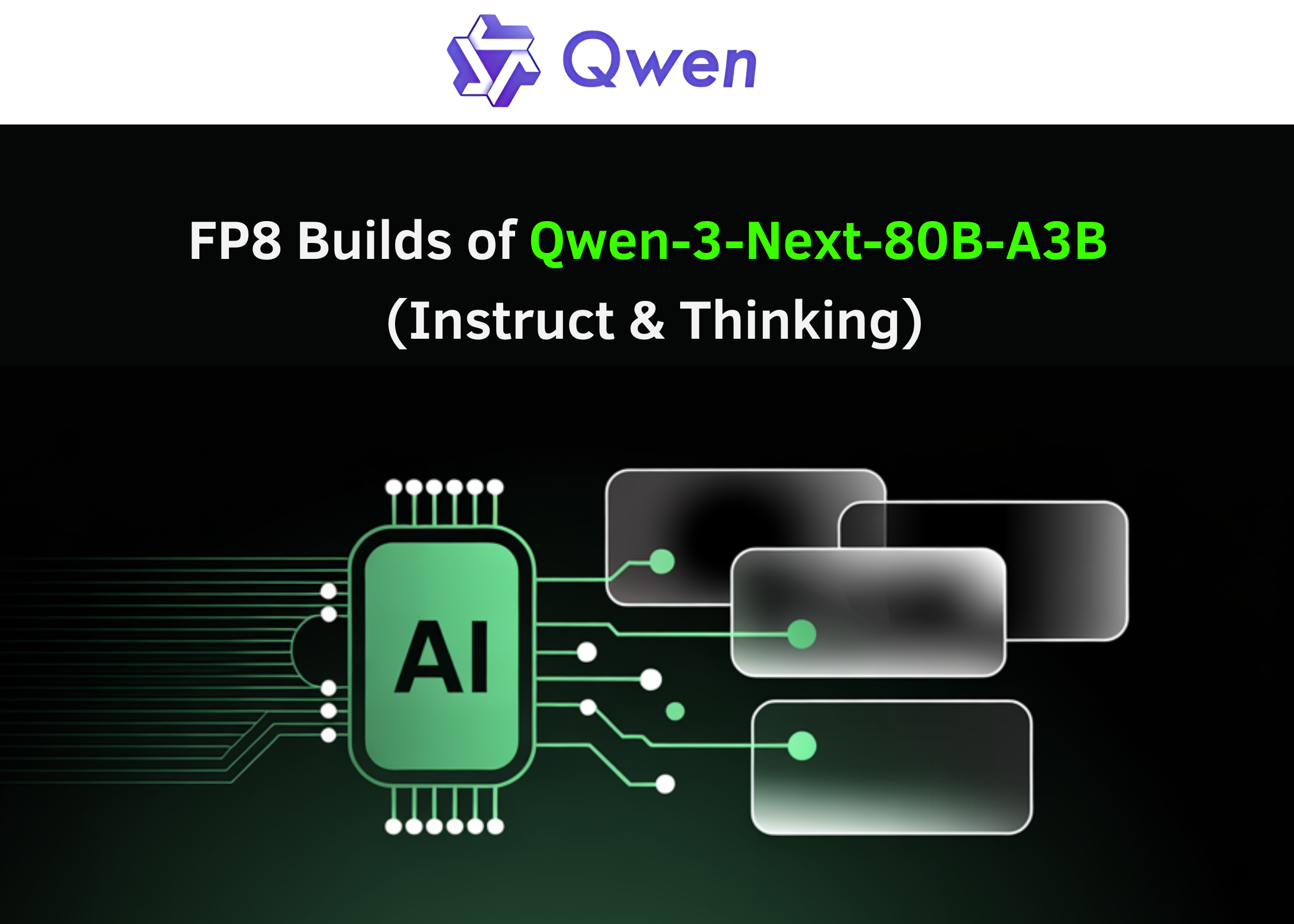
Alibaba Qwen Team Just Released FP8 Builds of Qwen3-Next-80B-A3B (Instruct & Thinking), Bringing 80B/3B-Active Hybrid-MoE to Commodity GPUs

Alibabas Qwen team has introduced FP8-quantized checkpoints for their Qwen3-Next-80B-A3B models, available in Instruct and Thinking variants, optimized for high-throughput inference with ultra-long context windows and efficient Mixture-of-Experts (MoE) architecture. These FP8 models mirror the earlier BF16 releases but incorporate fine-grained FP8 weights with a block size of 128, providing performance benefits without altering evaluation benchmarks, and include deployment notes compatible with sglang and vLLM nightly builds. The Qwen3-Next-80B-A

Business
📄 MarkTechPost

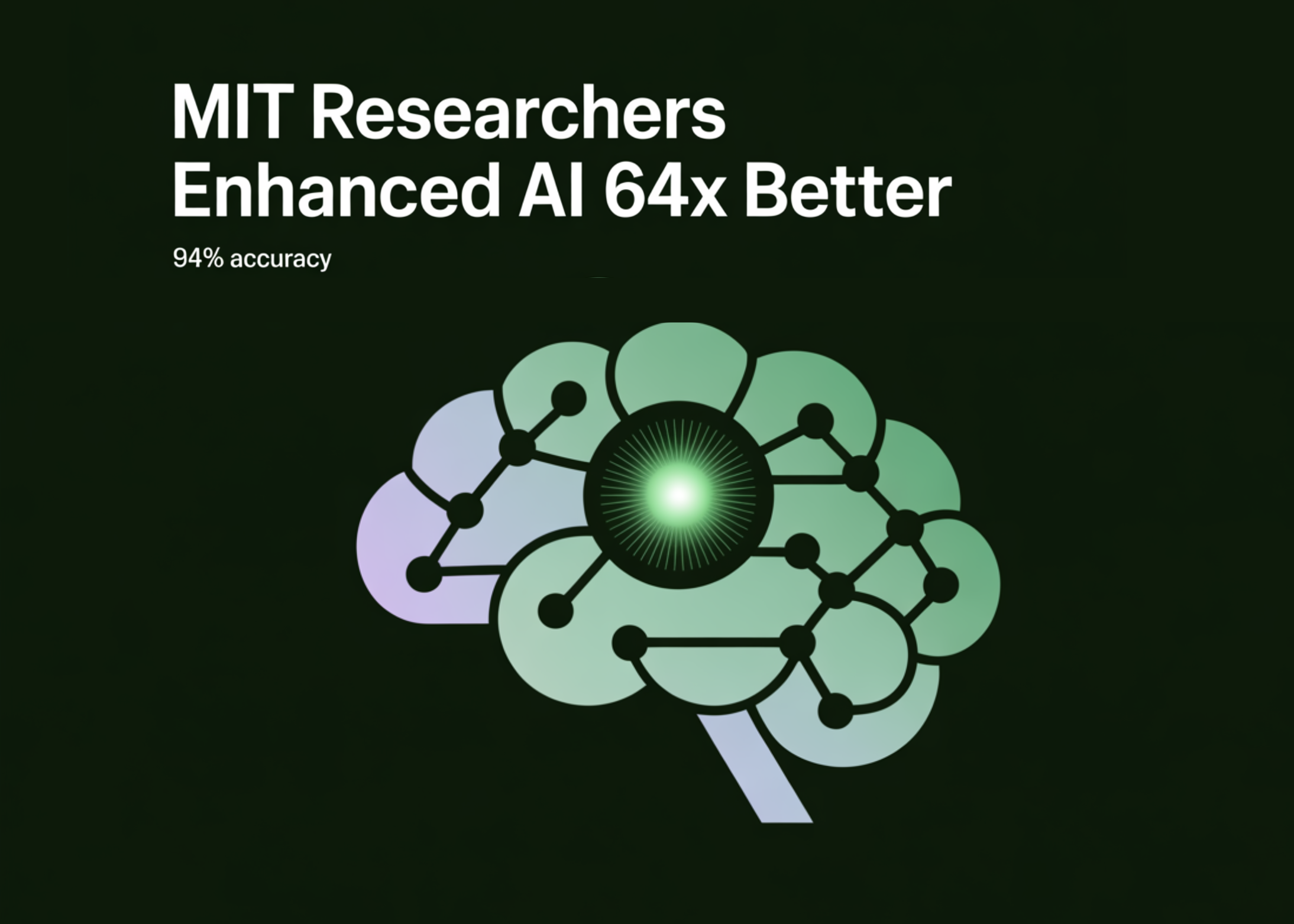
MIT Researchers Enhanced Artificial Intelligence (AI) 64x Better at Planning, Achieving 94% Accuracy

MIT CSAIL researchers have developed PDDL-INSTRUCT, an instruction-tuning framework that significantly enhances the logical reasoning and validity of multi-step plans generated by 8-billion-parameter language models like Llama-3-8B. By integrating explicit state and action semantics with external plan validation (VAL), the approach addresses the common issue of LLMs producing plausible but logically invalid plans, achieving up to 94% validity on the Blocksworld benchmark and up to a 66% improvement over previous methods. This innovative method combines logical chain-of-thought prompting with ground-truth plan validation, where

Meta AI
Read More
Research
📄 MarkTechPost

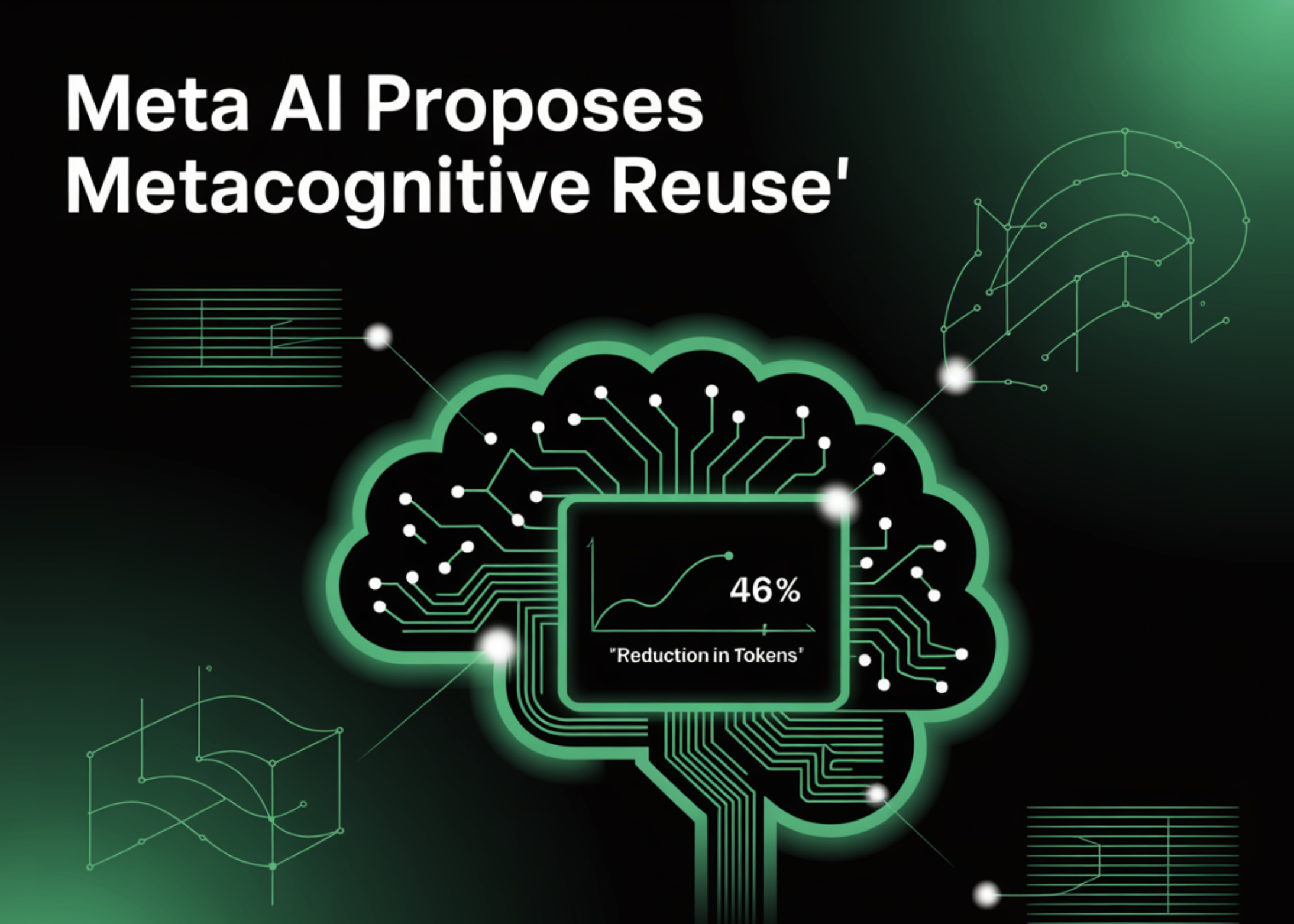
Meta AI Proposes Metacognitive Reuse: Turning LLM Chains-of-Thought into a Procedural Handbook that Cuts Tokens by 46%

Meta researchers have developed "Metacognitive Reuse," a novel approach that compresses common reasoning patterns into concise, named procedures called "behaviors," which are stored in a searchable handbook. This method enables large language models (LLMs) to reuse these behaviors during inference, significantly reducing reasoning token usageup to 46% on the MATH datasetwhile maintaining or improving accuracy, and achieving up to 10% gains in self-improvement scenarios like AIME, all without altering model weights. The process involves a reflection pipeline where an LLM identifies recurring procedural steps from prior problem traces,

Meta AI
Read More

Page 53 of 130 • Showing articles 625-636 of 1560